

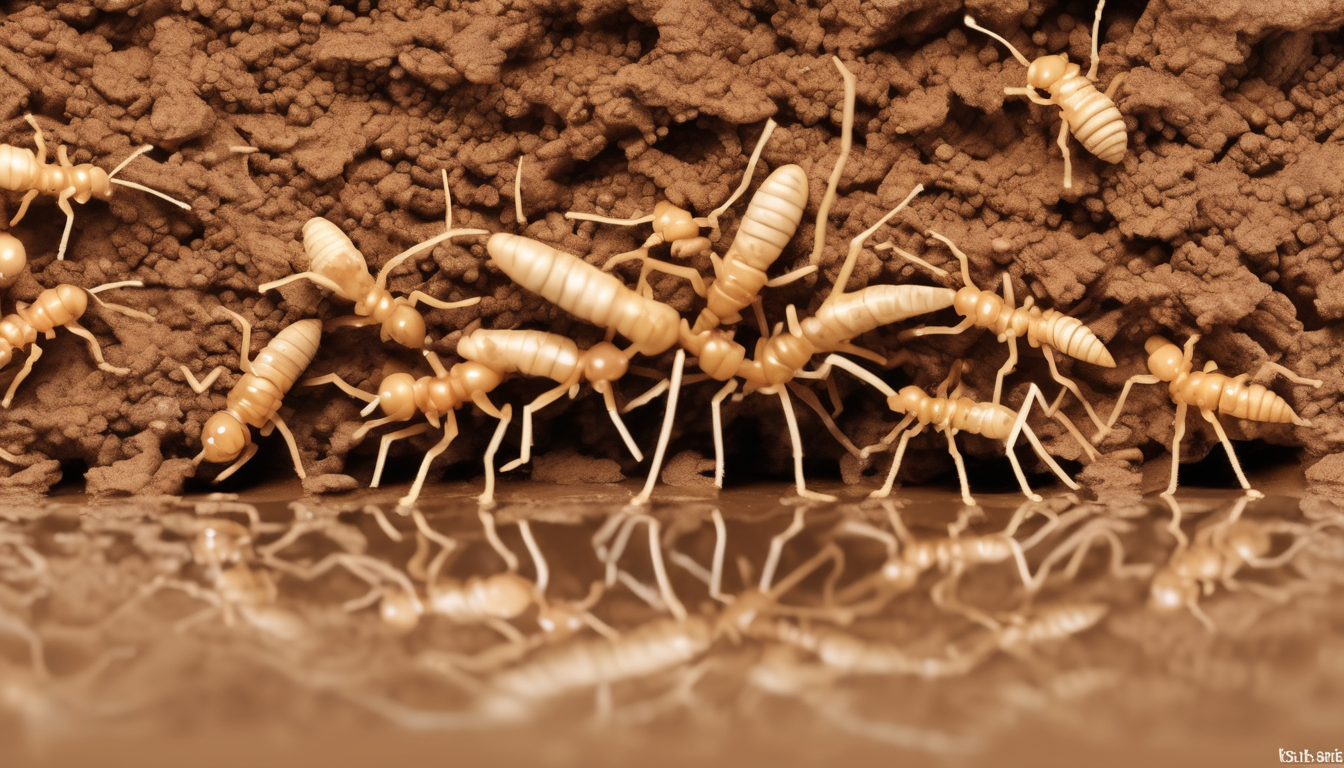

When conducting termite inspections across Dubai villas and commercial properties, I consistently encounter one of nature’s most remarkable engineering feats: the Termite Mud Tube. These earthen tunnels represent far more than simple pathways—they are sophisticated survival systems meticulously constructed by subterranean termites to overcome the extreme environmental challenges of the UAE. Understanding why termite create mud tubes requires examining their biological needs, environmental adaptations, and the specific conditions that make Dubai properties particularly vulnerable to these structures.
Throughout my career as Head of Operations at Saniservice Dubai, I’ve documented thousands of mud tube formations across every emirate, from Palm Jumeirah waterfront villas to Downtown Dubai high-rises. Each tube tells a story about the colony’s strategy, the property’s vulnerabilities, and the environmental factors sustaining termite activity. This comprehensive guide draws from that field experience to explain exactly why termite create mud tubes, how they function in UAE conditions, and what these structures reveal about the hidden termite activity threatening your property.
Biological Necessity Why Termite Create Mud Tubes
Subterranean termites face a fundamental biological challenge: they must maintain constant contact with soil moisture while accessing above-ground food sources. This dilemma explains the primary reason why termite create mud tubes—these structures serve as protected moisture-retaining tunnels that bridge the dangerous gap between their underground nests and the wooden structures they target. In Dubai’s arid climate, where surface temperatures regularly exceed 45°C during summer months, exposed termites would desiccate within minutes without these protective passages.
The biological imperative behind why termite create mud tubes extends beyond simple moisture retention. Termites possess soft, vulnerable exoskeletons that offer minimal protection against predators, ultraviolet radiation, and temperature extremes. Mud tubes provide a darkened, humid microenvironment that shields worker termites during their foraging activities. This protection is particularly critical in UAE conditions where direct sunlight can rapidly elevate surface temperatures to lethal levels for these delicate insects.
Another crucial biological factor explaining why termite create mud tubes involves their respiratory system. Termites breathe through small openings called spiracles, and they require high humidity levels to prevent respiratory fluid evaporation. The mud tube’s enclosed environment maintains the necessary humidity gradient that enables termites to venture far from their moist soil connection without suffering fatal dehydration. This adaptation allows Dubai termite colonies to exploit food sources that might be several meters above ground level or distant from their central nest location.
Dubai Environmental Factors Driving Mud Tube Construction
Dubai’s unique environmental conditions significantly influence why termite create mud tubes with particular characteristics. The combination of extreme heat, low natural humidity, and extensive artificial irrigation creates ideal circumstances for mud tube development. Unlike temperate regions where termites might forage more openly, UAE termites face existential threats from the climate that make mud tube construction not just beneficial but essential for survival.
The intense solar radiation in Dubai accelerates desiccation risk, forcing termites to build more substantial mud tubes with thicker walls compared to their counterparts in more humid climates. I’ve measured Dubai mud tubes with wall thickness exceeding 5 mm in exposed areas, while shaded portions might be only 2-3 mm thick. This adaptive construction demonstrates how termites modify their engineering based on micro-environmental conditions, another reason why termite create mud tubes with variable characteristics throughout a single structure.
Artificial irrigation patterns throughout Dubai properties create another environmental factor influencing why termite create mud tubes. The regular watering of gardens, lawns, and landscaping maintains soil moisture levels that support termite colonies even during the hottest months. However, the transition from moist soil to dry building foundations creates a barrier that termites must bridge using mud tubes. This explains why termite create mud tubes most frequently at the interface between irrigated landscaping and building foundations—a pattern I observe consistently during villa inspections across Emirates Hills, Arabian Ranches, and Jumeirah.
Structural Pathways Why Termite Create Mud Tubes
The architectural features common to Dubai construction provide numerous opportunities explaining why termite create mud tubes along specific pathways. Termites are opportunistic engineers that follow the path of least resistance, and Dubai’s building designs often create ideal conduits for mud tube development. Understanding these structural vulnerabilities helps property owners recognize why termite create mud tubes in particular locations and how to disrupt these pathways.
Foundation details significantly influence why termite create mud tubes at certain access points. The gap between slab edges and surrounding soil, expansion joints, utility penetrations, and construction cracks all provide entry opportunities that termites exploit. I frequently document mud tubes following the concrete-soil interface around villa foundations, particularly where irrigation keeps the soil consistently moist. These structural features explain why termite create mud tubes as vertical structures rising from soil to wood contact points.
Above-ground features also contribute to why termite create mud tubes across building surfaces. Decorative stone cladding, external insulation systems, and cavity walls create hidden spaces where termites can construct protected mud tubes undetected. The prevalence of these architectural elements in Dubai properties explains why termite create mud tubes that remain concealed until significant damage has occurred. During inspections, I use specialized tools to investigate these hidden spaces because the external appearance often reveals little about the internal mud tube development.
Moisture Requirements Why Termite Create Mud Tubes
The critical moisture dependency of subterranean termites fundamentally explains why termite create mud tubes as hydraulic engineering systems. Termites require a constant moisture source not just for survival but for the actual construction process itself. The mud tube material consists of soil particles bound together with termite saliva and fecal material—a mixture that requires precise moisture content to maintain structural integrity while allowing termite passage.
Moisture gradients significantly influence why termite create mud tubes along specific pathways. Termites detect and follow humidity gradients toward higher moisture sources, which often leads them to building defects such as plumbing leaks, condensate discharge points, or poorly drained areas. This moisture-seeking behavior explains why termite create mud tubes that frequently lead to bathrooms, kitchens, air conditioning units, and irrigation control boxes in Dubai properties.
The relationship between irrigation practices and why termite create mud tubes deserves particular attention in UAE conditions. Many Dubai properties maintain extensive landscaping requiring regular irrigation, creating persistent moisture sources that termites exploit. The pattern of mud tube development often directly mirrors irrigation zones, with tubes concentrating around drip lines, sprinkler heads, and areas of water accumulation. This connection between human water management and termite activity explains why termite create mud tubes more prolifically in landscaped properties than in arid natural environments.
Mud Tube Construction Process Explained
The engineering process behind why termite create mud tubes involves sophisticated collective behavior and material science. Worker termites coordinate to construct these passages using soil particles from their nest area or from the immediate environment. The construction begins with pioneer termites exploring potential pathways while maintaining physical contact with the moisture source through a chain of workers passing moisture along the line.
The initial construction phase explaining why termite create mud tubes starts with individual soil particles being cemented together using a mixture of saliva and fecal material. This binding agent creates a waterproof lining that reduces moisture loss through the tube walls. As construction progresses, the tube expands both in diameter and wall thickness to accommodate increased termite traffic and provide greater protection. This progressive construction explains why termite create mud tubes that often show visible layering when examined in cross-section.
Maintenance activities form another aspect of why termite create mud tubes continuously throughout their active period. Termites constantly repair damage from weather, predators, or human disturbance, and they modify tube dimensions based on changing environmental conditions. This ongoing maintenance explains why termite create mud tubes that may appear recently constructed even when the colony has been active for months or years. The fresh appearance of mud tubes often misleads property owners into believing infestation is recent when it may be well-established.
Identifying Different Mud Tube Types in Dubai
Professional termite inspectors recognize distinct mud tube categories that reveal specific information about why termite create mud tubes in various situations. The three primary types include exploratory tubes, working tubes, and drop tubes, each serving different functions in the colony’s foraging strategy. Identifying these variations helps understand why termite create mud tubes with different characteristics throughout a property.
Exploratory tubes represent the initial phase of why termite create mud tubes when searching for new food sources. These structures are typically thin, fragile, and may extend in multiple directions from a central point. They often appear on foundation walls, piers, or other vertical surfaces as termites seek pathways to wood members. The presence of exploratory tubes indicates active searching behavior and explains why termite create mud tubes as reconnaissance structures before committing to major construction.
Working tubes represent the main highways explaining why termite create mud tubes for regular foraging activities. These structures are larger, more robust, and show evidence of heavy traffic with polished interiors and multiple layers of construction. Working tubes typically connect directly between soil and wood members, often hidden within walls or under flooring. Their discovery indicates established termite activity and explains why termite create mud tubes as permanent infrastructure supporting ongoing feeding operations.
What Mud Tubes Reveal About Termite Activity
The characteristics of mud tubes provide valuable diagnostic information explaining why termite create mud tubes with specific features that indicate colony status and behavior. During inspections, I carefully document tube dimensions, location, moisture content, and activity levels because these factors reveal critical information about the termite infestation. This forensic approach helps understand why termite create mud tubes as expressions of colony needs and environmental conditions.
Tube location patterns significantly contribute to understanding why termite create mud tubes in particular areas. Tubes concentrated on north-facing walls often indicate moisture retention preferences, while tubes on south-facing walls might suggest proximity to food sources overriding microclimate concerns. The vertical height of tubes explains why termite create mud tubes to access specific structural elements, with higher tubes often indicating attempts to reach roof timbers or upper-floor woodwork.
Activity levels within tubes provide immediate insights explaining why termite create mud tubes that are currently maintained versus abandoned. Active tubes show signs of recent construction, moisture content, and often contain live termites when opened carefully. Inactive tubes may be dry, crumbling, or show spider webs and other signs of vacancy. This distinction helps prioritize treatment areas and understand why termite create mud tubes that may represent historical rather than current activity.
Professional Mud Tube Inspection Techniques
Proper inspection methodology is essential for accurately assessing why termite create mud tubes and determining appropriate management strategies. As Head of Operations at Saniservice Dubai, I’ve developed specific inspection protocols for UAE conditions that account for local construction methods and environmental factors. These techniques help uncover the complete picture explaining why termite create mud tubes throughout a property.
Moisture mapping forms a critical component of understanding why termite create mud tubes in specific locations. Using professional moisture meters, I document humidity levels in walls, floors, and soil around the property perimeter. Correlation between high moisture readings and mud tube presence often explains why termite create mud tubes along particular pathways. This moisture mapping frequently reveals hidden water sources such as leaking pipes, condensation issues, or irrigation overspray that contribute to termite activity.
Strategic probing and limited destructive inspection help verify why termite create mud tubes that may conceal extensive activity. In cases where mud tubes appear on surfaces, careful opening of wall cavities or subfloor areas may reveal additional tube networks and damage. This investigative approach explains why termite create mud tubes as visible indicators of more extensive hidden activity that requires comprehensive treatment rather than simple surface removal.
Preventing Mud Tube Formation on Dubai Properties
Understanding why termite create mud tubes leads directly to effective prevention strategies that address the underlying causes rather than just the visible structures. Prevention focuses on eliminating the conditions that explain why termite create mud tubes by modifying moisture patterns, structural details, and landscape management. These proactive measures significantly reduce termite pressure and mud tube development on Dubai properties.
Moisture management represents the most effective approach to addressing why termite create mud tubes by removing their fundamental requirement. This involves correcting drainage issues, repairing leaks, redirecting condensate discharge, and modifying irrigation practices to prevent water accumulation near foundations. By maintaining a dry zone around structures, property owners directly counter the environmental conditions that explain why termite create mud tubes as moisture conservation systems.
Physical barriers and construction modifications provide another prevention strategy by addressing the structural factors explaining why termite create mud tubes as access pathways. Stainless steel mesh barriers, termiticide-treated zones, and careful sealing of construction gaps create obstacles that discourage tube construction. These measures are particularly valuable in new construction or major renovations where addressing why termite create mud tubes can be incorporated into the design phase rather than added as retrofits.
Expert Tips for Mud Tube Management in Dubai
Based on thousands of termite inspections across the UAE, I’ve developed specific recommendations for managing mud tube issues in local conditions. These practical tips address the unique environmental and structural factors that explain why termite create mud tubes in Dubai properties and how to respond effectively when they appear.
First, never remove mud tubes without professional assessment. The tubes themselves provide valuable diagnostic information explaining why termite create mud tubes in that location and what treatment approach will be most effective. Removal before inspection destroys evidence and may cause termites to relocate to more hidden areas, complicating future detection and treatment.
Second, focus on moisture control as the primary prevention strategy. Since moisture requirements fundamentally explain why termite create mud tubes, addressing water issues often provides more lasting protection than chemical treatments alone. Regularly inspect irrigation systems, repair leaks promptly, and ensure proper drainage around foundations to reduce the moisture gradient that attracts termites.
Third, conduct regular professional inspections, particularly before and after the summer months when termite activity often increases. Early detection of mud tubes allows for intervention before significant damage occurs and helps understand why termite create mud tubes as early warning indicators rather than signs of established infestation.
Frequently Asked Questions About Mud Tubes
How quickly can termites build mud tubes in Dubai conditions?
Termites can construct exploratory mud tubes extending several meters within 24-48 hours under ideal conditions. Working tubes develop more slowly but may reach substantial size within a week. Construction speed depends on temperature, humidity, soil type, and colony size, but Dubai’s warm climate generally accelerates mud tube development compared to cooler regions.
Should I remove mud tubes myself if I find them?
I strongly advise against removing mud tubes before professional inspection. The tubes provide valuable information about termite activity, and removal may cause termites to retreat and rebuild in more hidden locations. Professional inspectors need to examine intact mud tubes to determine activity levels, treatment priorities, and colony location.
Do all mud tubes indicate active termite infestation?
Not necessarily. While fresh, moist mud tubes with live termites indicate current activity, dry, crumbling tubes may represent abandoned pathways. However, even inactive tubes suggest that conditions attracted termites previously and might do so again. Professional assessment can determine whether tubes represent active infestation requiring immediate treatment or historical activity requiring preventive measures.
Understanding why termite create mud tubes provides essential insights into termite behavior, colony needs, and property vulnerabilities. These remarkable structures represent sophisticated biological engineering that enables termites to survive and thrive in Dubai’s challenging environment. By recognizing mud tubes as indicators rather than just nuisances, property owners can implement more effective termite management strategies that address the underlying causes of infestation rather than just the visible symptoms.
For more information, visit this resource.
