

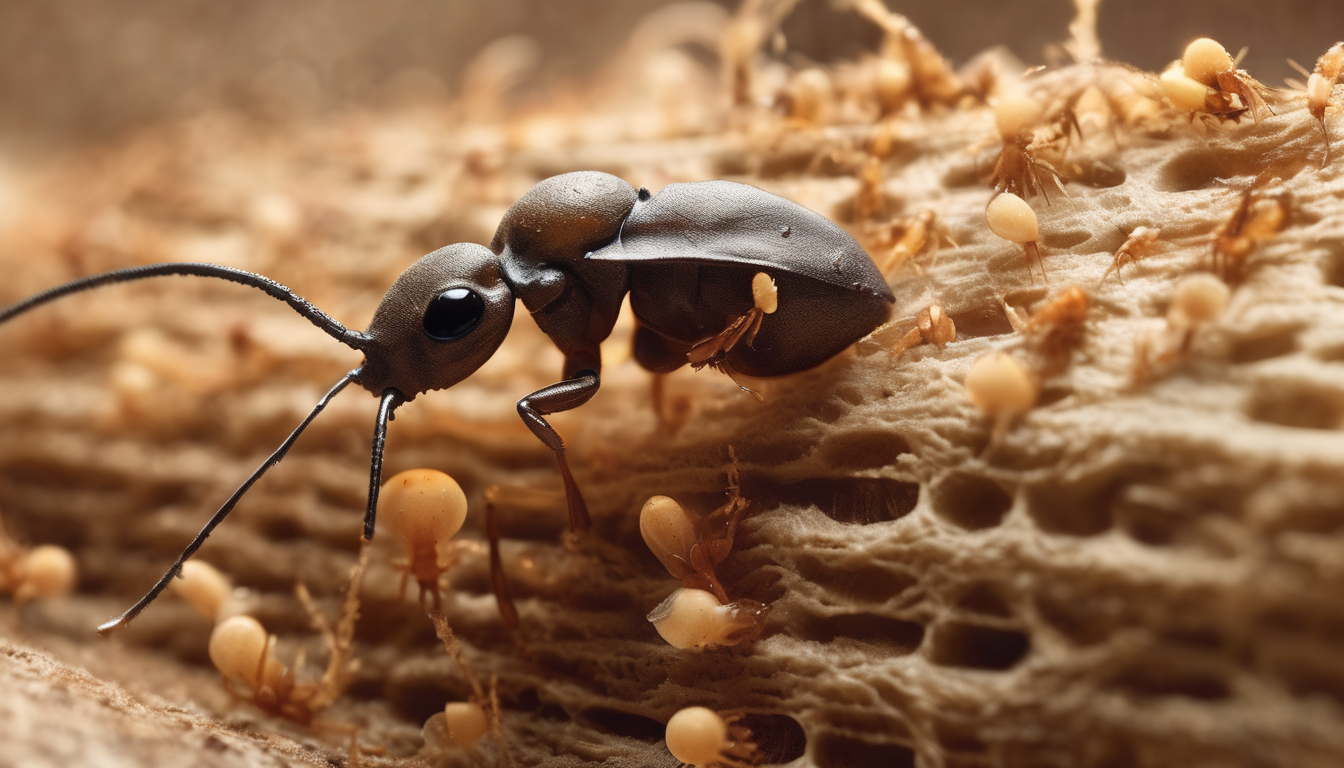

Termite mutualism with fungi and microorganisms represents one of nature’s most sophisticated biological partnerships, particularly relevant in the UAE’s unique desert environment. This complex relationship enables termites to digest tough cellulose materials that would otherwise be indigestible, making them highly efficient decomposers and, unfortunately for property owners, highly effective destroyers of wooden structures. In Dubai’s challenging climate, where temperatures regularly exceed 45°C and natural wood resources are limited, this symbiosis becomes even more critical for termite survival and proliferation.
The Termite Mutualism With fungi and microorganisms involves multiple layers of biological cooperation that have evolved over millions of years. From gut microbes that break down cellulose to fungal gardens that pre-digest wood, these relationships allow termites to thrive in environments where other wood-consuming insects would perish. Understanding these mechanisms is essential for developing effective termite management strategies in the UAE, where imported construction materials and extensive landscaping create ideal conditions for subterranean termite colonies to establish and expand.
Understanding Termite Mutualism With Fungi and Microorganisms
Termite mutualism with fungi and microorganisms begins with the fundamental challenge of cellulose digestion. Wood consists primarily of cellulose, hemicellulose, and lignin—complex polymers that most animals cannot break down. Termites have evolved sophisticated relationships with microorganisms that produce the necessary enzymes to decompose these tough plant materials. This mutualism operates on multiple levels, from internal gut symbionts to external fungal gardens cultivated by certain termite species.
In Dubai’s construction environment, this biological partnership becomes particularly problematic. Imported hardwoods, structural timbers, and even paper products provide abundant cellulose sources for termites equipped with their microbial partners. The efficiency of this digestion system allows termites to process wood at remarkable rates, with some species capable of consuming several kilograms of wood monthly. This digestive efficiency, powered by termite mutualism with fungi and microorganisms, explains why termite damage can progress so rapidly in Dubai villas and commercial properties.
The Symbiotic Hierarchy
The termite mutualism with fungi and microorganisms operates through a carefully balanced hierarchy. Primary symbionts in the termite gut break down cellulose into simpler compounds, while secondary microorganisms process these into nutrients the termites can absorb. This multi-stage digestion allows termites to extract maximum nutrition from minimal wood resources, a critical adaptation in Dubai’s nutrient-poor desert soils where natural wood sources are scarce.
Termite Mutualism With Fungi And Microorganisms – Dubai Termite Species and Their Microbial Partners
The UAE hosts several termite species that demonstrate remarkable termite mutualism with fungi and microorganisms. The most common structural pest, Psammotermes hybostoma, maintains complex gut microbiomes containing protists, bacteria, and archaea that work in concert to digest cellulose. These microbial communities are highly specialized and co-evolved with their termite hosts, making them exceptionally efficient at processing the imported hardwoods commonly used in Dubai construction.
Another species found in the region, Microcerotermes diversus, exhibits different patterns of termite mutualism with fungi and microorganisms. This species tends to maintain external fungal associations rather than relying solely on internal symbionts. The specific microbial partnerships vary by species, soil type, and available food sources, creating distinct digestion profiles across Dubai’s different neighbourhoods and property types.
Species Distribution Patterns
In Dubai’s Palm Jumeirah and waterfront communities, higher humidity levels support different microbial communities within termite guts compared to inland areas like Arabian Ranches. This geographical variation in termite mutualism with fungi and microorganisms affects digestion rates and damage patterns, requiring tailored inspection and treatment approaches based on location-specific microbial ecology.
Termite Mutualism With Fungi And Microorganisms – The Termite Gut Microbiome Role in Digestion
The termite gut serves as a miniature bioreactor where termite mutualism with fungi and microorganisms achieves its most sophisticated expression. A single termite may host hundreds of microbial species in its digestive system, each performing specific biochemical functions. Protists (single-celled eukaryotes) often serve as primary cellulose degraders, while bacteria process the breakdown products into volatile fatty acids that termites can absorb as energy sources.
This intricate termite mutualism with fungi and microorganisms allows termites to extract up to 90% of the energy contained in wood, compared to approximately 50% for cattle digesting grass. This exceptional efficiency explains why termites require relatively small wood quantities to sustain large colonies, making them particularly dangerous to structural elements where even limited feeding can compromise integrity.
Digestive Adaptations to Dubai Conditions
Termites in the UAE have evolved gut microbiomes specifically adapted to local conditions. Their microbial partners show enhanced tolerance to the high temperatures and saline conditions common in Dubai soils. This adaptation in termite mutualism with fungi and microorganisms enables colonies to remain active throughout the extreme summer months when surface temperatures exceed 50°C, continuing their destructive feeding activities undetected within cooled structures.
Fungal Cultivation by Termites in UAE Conditions
Some termite species engage in external termite mutualism with fungi and microorganisms through fungal cultivation. These termites maintain fungus gardens within their nests where specific fungi grow on predigested plant material. The fungi break down lignin and cellulose more efficiently than gut microbes alone, and termites then consume both the partially decomposed wood and the fungal biomass itself.
In Dubai properties, evidence of fungal cultivation often appears as distinctive spherical structures within termite nests. These fungal combs represent a highly evolved form of termite mutualism with fungi and microorganisms that significantly enhances digestion efficiency. Property owners may notice unusual fungal growth in areas of termite activity, which actually indicates advanced colony establishment rather than mere moisture problems.
Identification Signs
Technicians inspecting Dubai villas for termite mutualism with fungi and microorganisms should look for specific indicators of fungal cultivation. These include distinctive fungal nodules, specialized chamber structures within nests, and particular patterns of wood decomposition. Recognizing these signs helps assess colony maturity and digestion efficiency, which informs treatment strategy selection and timing.
Climate Adaptation Through Microbial Partnerships
Termite mutualism with fungi and microorganisms provides critical climate adaptation advantages in Dubai’s extreme environment. Microbial partners help termites manage water retention, temperature regulation, and metabolic stability under conditions that would otherwise be lethal. The microbial communities within termite guts produce compounds that protect against desiccation during Dubai’s prolonged dry periods and heat shock proteins that maintain enzymatic function during temperature extremes.
This climate adaptation through termite mutualism with fungi and microorganisms explains why termites remain active year-round in UAE conditions, unlike seasonal patterns observed in temperate regions. The microbial partnerships essentially create microclimates within termite colonies that buffer against external environmental stresses, allowing continuous feeding and colony expansion regardless of surface conditions.
Irrigation System Impact
Dubai’s extensive landscape irrigation systems significantly influence termite mutualism with fungi and microorganisms. Consistent moisture availability supports richer microbial communities that enhance digestion rates. This explains why termite damage often correlates with irrigation patterns around villas and commercial properties, with higher activity near water sources that sustain both termites and their microbial partners.
Structural Implications for Dubai Properties
The efficiency of termite mutualism with fungi and microorganisms has direct implications for structural integrity in Dubai buildings. The enhanced digestion capacity means termites can compromise structural members more rapidly than many property owners anticipate. A colony operating with optimal microbial support can hollow out critical load-bearing timbers within months rather than years, creating sudden structural failures without obvious external warning signs.
In Dubai’s construction environment, where imported woods may lack natural resistance factors found in native species, termite mutualism with fungi and microorganisms operates with particular effectiveness. European oak, American pine, and Asian hardwoods commonly used in luxury fittings and structural elements fall prey to termite-microbe digestion systems that never encountered these wood types in their evolutionary history but adapt rapidly to new food sources.
Hidden Damage Patterns
The termite mutualism with fungi and microorganisms often creates distinctive damage patterns in Dubai properties. Rather than uniform consumption, microbial digestion tends to follow wood grain patterns and moisture gradients, creating honeycombed structures that retain external appearance while losing internal strength. This hidden damage pattern makes visual inspection alone insufficient for assessing structural compromise.
Management Strategies Targeting Microbial Relationships
Effective termite management in Dubai must account for termite mutualism with fungi and microorganisms. Traditional insecticides alone often fail because they disrupt only one component of this complex system. Advanced strategies target the microbial partnerships themselves, using compounds that interfere with cellulose digestion or disrupt the delicate balance of gut symbionts.
Borate treatments have proven particularly effective against termite mutualism with fungi and microorganisms in UAE conditions. Borates interfere with microbial enzyme systems without presenting immediate toxicity to termites, allowing transfer throughout the colony before effects become apparent. This delayed action specifically targets the digestive mutualism that sustains the colony rather than just killing individual termites.
Integrated Approach Requirements
Managing termite mutualism with fungi and microorganisms requires integrated approaches that address moisture control, wood treatment, and soil modification. Simply applying insecticides ignores the ecological foundation of termite survival. Successful long-term control modifies the environment to make it less supportive of the microbial partnerships that enable termite digestion and colony sustainability.
Expert Tips for Property Owners
Understanding termite mutualism with fungi and microorganisms provides valuable insights for Dubai property protection. First, recognize that termites never operate alone—their microbial partners enable their damage capacity. Second, moisture management remains critical because microbial activity requires specific humidity levels. Third, regular professional inspections should include assessment of conditions that support microbial partnerships, not just visible termite activity.
Property owners should address irrigation overspray, plumbing leaks, and condensation issues that create ideal conditions for termite mutualism with fungi and microorganisms. Using termite-resistant woods treated with borates or other microbial inhibitors can disrupt digestion efficiency. Most importantly, develop a monitoring program that detects early signs of termite activity before microbial partnerships become fully established and damage accelerates.
Frequently Asked Questions
How does termite mutualism with fungi and microorganisms affect treatment effectiveness?
The microbial partnerships make termites more resilient to some treatments but vulnerable to others. Treatments targeting digestion processes often prove more effective than general insecticides because they disrupt the foundation of colony sustainability.
Can termites survive without their microbial partners?
No. Termites depend completely on their microbial partners for digestion. Eliminating these microorganisms through specific treatments or environmental modification effectively controls colonies by starving them despite available wood resources.
Do all termite species in Dubai have the same microbial partnerships?
No. Different species maintain different microbial communities adapted to their specific habitats and feeding preferences. Treatment strategies should account for these variations based on species identification and local conditions.
Termite mutualism with fungi and microorganisms represents a fascinating biological adaptation that unfortunately creates significant challenges for Dubai property owners. By understanding these relationships, developing targeted management strategies, and implementing preventive measures that disrupt microbial partnerships, property managers can protect structures from the sophisticated digestive efficiency that makes termites such effective destroyers.
