

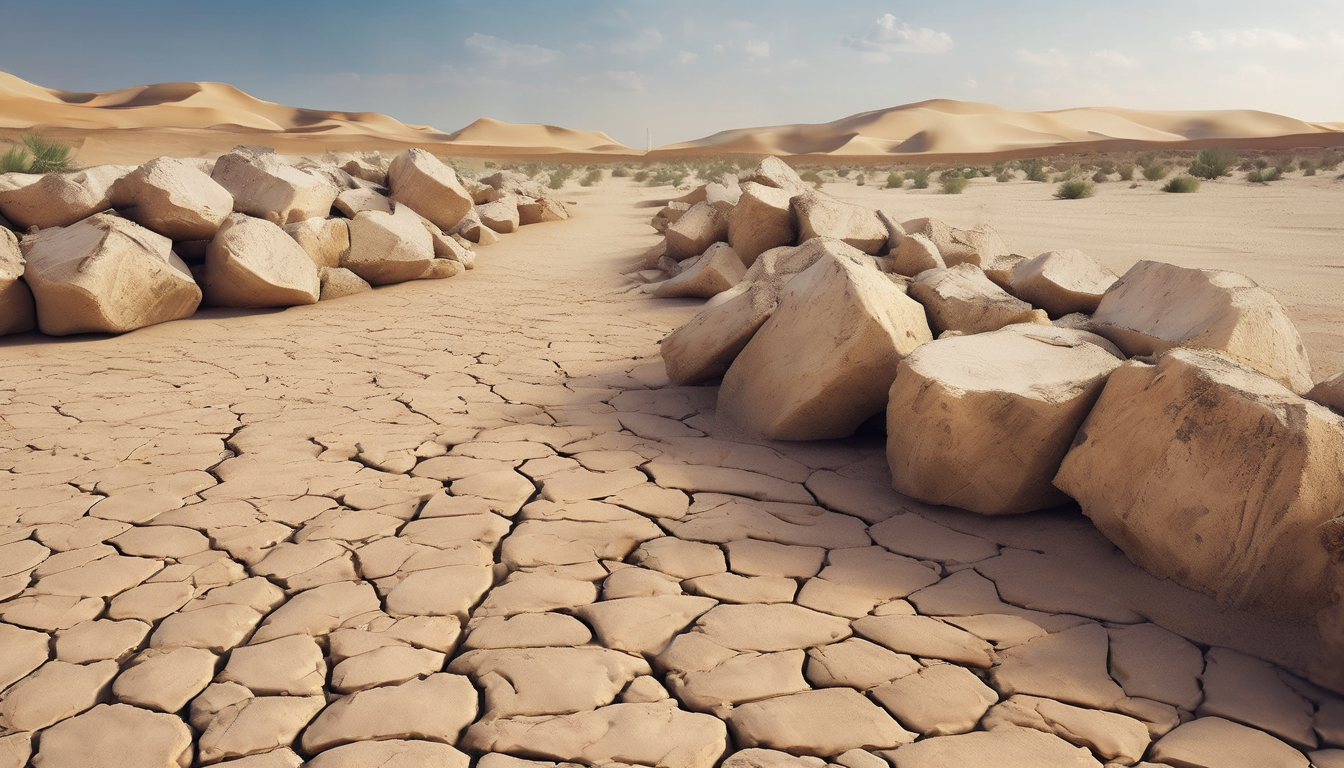

Understanding Rock Barriers vs Chemical Soil Treatments In Desert Soils is essential. When protecting a property in Dubai, Abu Dhabi, or across the Emirates from subterranean termites, one fundamental question arises: should you invest in physical rock barriers, rely on chemical soil treatments, or combine both approaches? The decision between rock barriers and chemical soil treatments in desert soils is far more nuanced than it initially appears. After years of conducting termite investigations across hundreds of villas, waterfront properties, and commercial developments in the UAE, I’ve learned that this choice directly impacts long-term structural integrity and, importantly, your investment’s resale value.
Understanding rock barriers versus chemical soil treatments in desert soils requires examining how each method functions within the unique environment of the Arabian Peninsula. Dubai’s sandy soils, high water table near coastal areas, and irrigation-heavy landscaping create conditions that challenge both approaches in ways that professionals in temperate climates rarely encounter. The physics of termite movement through sand, the chemistry of pesticide persistence in arid environments, and the practical logistics of installation and maintenance all influence which solution serves your property best. This relates directly to Rock Barriers Vs Chemical Soil Treatments In Desert Soils.
This article provides a detailed, evidence-based comparison of both approaches, examining their effectiveness, costs, installation requirements, and suitability for different property types across the UAE. Whether you’re protecting a villa in Emirates Hills, a commercial development in Deira, or a heritage property in Al Fahidi, this analysis will help you make an informed decision grounded in local experience and technical understanding.
Rock Barriers Vs Chemical Soil Treatments In Desert Soils – Understanding Rock Barriers vs Chemical Soil Treatments Mech
Rock barriers and chemical soil treatments represent two fundamentally different strategies for preventing termite entry into structures. Rock barriers function as physical obstacles that termites cannot penetrate, while chemical treatments create invisible toxicological boundaries that kill or repel foraging termites. The choice between them hinges on understanding how each mechanism operates within desert soil conditions.
The Physics of Termite Movement in Sandy Soils
Subterranean termites in the UAE, particularly Psammotermes hybostoma and Microcerotermes species, follow distinct foraging patterns shaped by soil density and moisture availability. These termites construct mud tubes through sand, creating highways that can extend tens of metres from the colony to food sources. In Dubai’s predominantly sandy soils, termites tunnel at depths ranging from 30 centimetres to over 2 metres, depending on moisture levels and food availability. When considering Rock Barriers Vs Chemical Soil Treatments In Desert Soils, this becomes clear.
This behaviour directly influences how rock barriers perform. Unlike dense clay soils in temperate regions, UAE sandy soils offer termites relatively easy tunnelling access. Termites can navigate around obstacles by tunnelling deeper or wider, making the barrier’s design and installation depth critical factors. Chemical treatments, by contrast, create a toxicological zone that persists regardless of termite tunnelling depth, though soil chemistry and moisture conditions significantly affect their persistence.
Desert Soil Chemistry and Treatment Persistence
Desert soils present unique challenges for chemical persistence. The arid environment of the UAE typically features low organic matter content, alkaline pH levels (often 7.5 to 8.5), and significant salt content near coastal areas. These conditions affect how termiticides persist in the soil profile. Understanding this chemistry is essential for evaluating rock barriers versus chemical soil treatments in desert soils, as chemical treatments may require more frequent reapplication than in wetter climates. The importance of Rock Barriers Vs Chemical Soil Treatments In Desert Soils is evident here.
Rock Barriers Vs Chemical Soil Treatments In Desert Soils – How Rock Barriers Function in Desert Soils
Rock barriers, sometimes called physical termite barriers, create a mechanical obstacle that termites cannot breach, tunnel through, or overcome. In UAE applications, these barriers typically consist of gravel or small stone particles sized 5-10 millimetres, installed in a continuous band around building foundations and through critical penetration points.
Barrier Design and Installation in UAE Foundations
In Dubai villas, rock barriers are typically installed in a 15-30 centimetre wide zone at the foundation perimeter, extending 30-50 centimetres below grade. The barrier must be continuous with no gaps, bridges, or cracks where termites could exploit passage. Installation quality directly determines effectiveness; a single construction defect can render the entire barrier ineffective. Understanding Rock Barriers Vs Chemical Soil Treatments In Desert Soils helps with this aspect.
The barrier’s depth is particularly important in UAE sandy soils, where termites readily tunnel below shallow barriers. Many properties in Dubai’s older villa communities relied on barriers installed only 15-20 centimetres deep—depths now recognised as insufficient. Modern specifications recommend extending barriers to 60 centimetres or deeper, particularly for properties with irrigation systems or landscaped gardens.
Advantages of Rock Barriers in Desert Conditions
Rock barriers offer several compelling advantages in the Arabian Peninsula environment. They require no chemical reapplication, creating a permanent, passive defence that functions indefinitely. For properties with health-sensitive occupants—families with children, immunocompromised individuals, or facilities like schools and hospitals—barriers eliminate chemical exposure concerns entirely. Rock Barriers Vs Chemical Soil Treatments In Desert Soils factors into this consideration.
In heritage properties across Al Fahidi or architecturally significant villas in Emirates Hills, rock barriers avoid introducing chemical treatments that might affect historic materials or restrict future restoration work. The barriers are also unaffected by soil pH, moisture variation, or salt content—conditions that challenge chemical persistence in UAE soils. Additionally, rock barriers versus chemical soil treatments in desert soils offer transparency; building owners can visualise and verify the barrier’s presence during construction, providing psychological confidence in protection.
Limitations and Failure Modes
Despite their advantages, rock barriers face practical challenges in the UAE. Installation requires precise execution; any deviation compromises protection. Builders frequently cut corners by installing barriers at insufficient depth, creating gaps around utility penetrations, or leaving bridging materials (concrete steps, pipes) that termites can use to bypass the barrier entirely. This relates directly to Rock Barriers Vs Chemical Soil Treatments In Desert Soils.
Soil settlement in sandy environments can create voids beneath barriers, allowing termites to tunnel underneath. In waterfront properties near Palm Jumeirah or coastal villas, saltwater intrusion can destabilise barriers if not properly installed with drainage provisions. Additionally, rock barriers address only termite entry at the foundation; they offer no protection against termites arriving via aerial pathways (through roof joints, external timber features, or decorative pergolas), a common scenario in Dubai’s heavily landscaped properties.
Chemical Soil Treatments: Effectiveness in Arid Conditions
Chemical soil treatments create a toxicological barrier by applying termiticides (insecticides) to the soil around foundations and beneath slabs. Modern formulations, particularly non-repellent compounds like imidacloprid and fipronil, kill termites that contact treated soil, disrupting colony nutrition and population dynamics. Understanding their effectiveness in rock barriers versus chemical soil treatments in desert soils requires examining how these chemicals persist in UAE environmental conditions. When considering Rock Barriers Vs Chemical Soil Treatments In Desert Soils, this becomes clear.
Termiticide Types and Performance in UAE Soils
Two primary chemical approaches exist: repellent and non-repellent treatments. Repellent termiticides (older formulations) create a barrier that termites avoid, similar to physical barriers. Non-repellent compounds kill termites upon contact, which proves superior because termites cannot detect treated soil and thus cannot avoid it. In the UAE, non-repellent formulations like imidacloprid perform well, though their persistence in alkaline, sandy soils requires careful application and monitoring.
The alkaline pH of most UAE soils (7.5-8.5) affects termiticide chemistry. Some compounds break down faster under alkaline conditions, requiring more frequent reapplication than in neutral-pH soils. Additionally, high salt content in soils near coastal areas can interfere with some chemical formulations, reducing their effectiveness. This reality directly shapes the comparison of rock barriers versus chemical soil treatments in desert soils, as chemical treatments require more active management in arid regions. The importance of Rock Barriers Vs Chemical Soil Treatments In Desert Soils is evident here.
Application Methods and Coverage Requirements
Chemical soil treatments typically involve one of three application methods: liquid soil injections around the foundation perimeter, sub-slab injections beneath concrete floors, or combination approaches targeting multiple pathways. Effective coverage requires injections at 30-50 centimetre intervals to a depth of 60-90 centimetres, creating a continuous treated zone.
In Dubai’s post-tension slab construction (common in modern towers and commercial properties), chemical treatment becomes technically complex. The slab’s internal tensioning cables and ducts create voids that complicate uniform treatment. Improper application leaves untreated zones where termites can establish activity, undermining the system’s effectiveness. This technical challenge makes chemical treatments more demanding in newer UAE construction than in traditional foundation systems. Understanding Rock Barriers Vs Chemical Soil Treatments In Desert Soils helps with this aspect.
Advantages in the UAE Environment
Chemical soil treatments offer flexibility unavailable with rock barriers. They can be retrofitted to existing properties without extensive excavation, making them cost-effective for villa owners discovering termite activity mid-occupation. They address termites at all depths simultaneously, not just at the barrier plane. Additionally, modern chemical treatments can be combined with baiting systems (Sentricon or similar technologies), providing both immediate control and ongoing monitoring of colony activity.
For commercial properties and high-turnover residential developments, chemical treatments offer rapid installation and immediate effectiveness. They require minimal site disruption, making them suitable for occupied buildings, shopping centres, and facilities where extended construction isn’t feasible. In rock barriers versus chemical soil treatments in desert soils, chemicals prove more practical for retrofitting existing structures across the UAE. Rock Barriers Vs Chemical Soil Treatments In Desert Soils factors into this consideration.
Limitations and Reapplication Challenges
The primary limitation is persistence. Termiticides in UAE sandy soils typically remain effective for 3-5 years, after which reapplication becomes necessary. Over a 20-year building lifespan, multiple reapplications are required, accumulating cost and environmental impact. Additionally, every reapplication requires access to treatment zones, which becomes problematic as properties age, landscaping matures, and hardscape features (pools, patios) encroach on foundation perimeters.
Chemical treatments also depend on precise application; coverage gaps permit termite passage. In complex foundation geometries, utility penetrations, and service trenches common in Dubai’s infrastructure, achieving complete coverage is challenging. Furthermore, some UAE soils contain high clay content or fill materials that reduce termiticide movement, creating treated zones shallower than intended. Monitoring effectiveness requires regular professional inspections, adding ongoing costs. This relates directly to Rock Barriers Vs Chemical Soil Treatments In Desert Soils.
Cost Comparison: Rock Barriers vs Chemical Soil Treatments in Desert Soils
Financial considerations significantly influence the rock barriers versus chemical soil treatments decision for UAE property owners. Initial installation costs, long-term maintenance expenses, and total cost of ownership over the property’s lifecycle differ substantially between approaches.
Initial Installation Costs
Rock barrier installation for an average Dubai villa (approximately 500 square metres of foundation perimeter) typically costs AED 8,000 to 15,000, depending on soil conditions, existing hardscape, and barrier depth. Installation is labour-intensive but straightforward, requiring excavation, material placement, and compaction. Prices vary across emirates; villa installations in Abu Dhabi may range AED 9,000 to 16,000, while Sharjah properties might cost AED 7,500 to 13,000. When considering Rock Barriers Vs Chemical Soil Treatments In Desert Soils, this becomes clear.
Chemical soil treatment for the same villa ranges from AED 6,000 to 12,000 initially, reflecting the cost of materials (termiticide concentrate is expensive) and application labour. Chemical treatment appears cheaper initially but this comparison is misleading without considering long-term costs.
Long-Term Financial Impact
A rock barrier, properly installed, requires no reapplication or maintenance beyond occasional visual inspection. Over 20 years, the total cost remains AED 8,000 to 15,000 (plus negligible inspection costs). Conversely, chemical treatments require reapplication every 3-5 years. For the same villa, three reapplications over 15 years add approximately AED 15,000 to 25,000 in additional costs. Over 30 years, chemical treatment total costs reach AED 25,000 to 40,000. The importance of Rock Barriers Vs Chemical Soil Treatments In Desert Soils is evident here.
This financial reality fundamentally shifts the rock barriers versus chemical soil treatments in desert soils calculation for long-term property owners. Families planning to own their villa for 10+ years, investors holding properties long-term, and developers building for longevity find rock barriers economically superior despite higher initial expense. Short-term occupants or developers focused on rapid turnover may prefer cheaper chemical approaches.
Unexpected Costs and Hidden Expenses
Chemical treatments incur hidden costs rarely disclosed upfront. Professional inspections every 1-2 years (recommended best practice) cost AED 1,500 to 3,000 per inspection for villas. Over 20 years, inspections total AED 15,000 to 30,000 additional cost. If termite activity is discovered between reapplications, emergency treatments add AED 5,000 to 10,000 per occurrence. Rock barriers, requiring inspection only during property transactions or suspected activity, avoid these recurring expenses. Understanding Rock Barriers Vs Chemical Soil Treatments In Desert Soils helps with this aspect.
Structural damage from termites discovered after lapsed chemical protection can cost dramatically more. A single infestation affecting imported hardwood flooring, custom joinery, or structural timber can exceed AED 50,000 to 150,000 in repairs. Rock barriers, once properly installed, eliminate this risk category entirely.
Installation Requirements and Practical Challenges
The technical reality of installing rock barriers versus chemical soil treatments in desert soils reveals why each approach suits different property scenarios and construction stages. Installation timing, site disruption, and execution complexity differ fundamentally. Rock Barriers Vs Chemical Soil Treatments In Desert Soils factors into this consideration.
Pre-Construction vs Post-Construction Installation
Rock barriers are most effectively installed during construction, before landscaping, hardscape, and utilities are finalised. Installation requires excavation around the entire foundation perimeter, precisely executed before concrete slabs are poured and utilities penetrate foundation walls. This timing advantage means new developments can incorporate barriers seamlessly, adding minimal schedule delay and cost.
Retrofitting rock barriers to existing properties demands extensive excavation around foundations, removal of existing landscaping and hardscape, and temporary disruption to occupancy. For a typical villa, barrier retrofit costs increase 40-60% over new construction installation because of hardscape removal and restoration. In apartment towers and commercial properties, retrofitting is often impractical, making rock barriers suitable only for new construction. This relates directly to Rock Barriers Vs Chemical Soil Treatments In Desert Soils.
Chemical treatments, by contrast, adapt easily to existing properties. They require minimal excavation and can be applied regardless of hardscape or landscaping. This flexibility makes chemical treatments the practical choice for retrofitting termite protection to existing villas, towers, and commercial properties across Dubai and the broader UAE.
Soil Preparation and Moisture Considerations
Desert soils present unique preparation challenges. UAE sandy soils often feature inconsistent density, pockets of fill material, and varying moisture retention. Rock barrier installation requires soil preparation—removing debris, compacting base material, and ensuring uniform density to prevent settlement voids beneath the barrier. When considering Rock Barriers Vs Chemical Soil Treatments In Desert Soils, this becomes clear.
Chemical treatment application similarly depends on soil preparation. Termiticide injection requires access to soil around the entire foundation perimeter. Compacted hardscape, tree roots, and utilities complicate access. Injection depth depends on soil density; loose sand requires different injection spacing than dense, well-compacted soil. Technical proficiency varies significantly among contractors, directly affecting treatment efficacy.
Utility Penetrations and Complex Geometries
Both approaches struggle with utility penetrations—plumbing, electrical conduit, HVAC ducts—that pierce foundation walls and slabs. These penetrations create pathways around both rock barriers and chemical treatments if not properly sealed and treated. Effective protection requires sealing each penetration with purpose-designed termite-proof sleeves and, for chemical treatments, injecting termiticide directly around each penetration point. The importance of Rock Barriers Vs Chemical Soil Treatments In Desert Soils is evident here.
In Dubai’s complex villa landscaping—pools, water features, decorative planters positioned against foundations—installation becomes particularly challenging. Rock barriers must be installed beneath these features before construction. Chemical treatments must achieve coverage despite site obstructions. The more complex the property’s geometry and utilities, the more installation quality matters for both approaches.
Durability and Long-Term Maintenance Considerations
Understanding the lifespan and maintenance requirements of rock barriers versus chemical soil treatments in desert soils reveals why long-term strategy differs substantially from short-term thinking. Maintenance profiles diverge dramatically between approaches. Understanding Rock Barriers Vs Chemical Soil Treatments In Desert Soils helps with this aspect.
Rock Barrier Durability in UAE Conditions
Properly installed rock barriers remain effective indefinitely, functioning as long as the building stands. The barrier’s physical nature means it cannot degrade through chemical processes or environmental exposure. However, durability depends entirely on initial installation quality. Barriers installed too shallowly fail when soil settles; barriers with gaps at utility penetrations fail immediately; barriers built over unstable fill fail within 2-5 years.
In the UAE’s coastal regions, saltwater intrusion can affect barriers if drainage is inadequate, though the inert stone material itself resists corrosion. The critical maintenance task is preventing soil settlement that creates voids beneath the barrier. Properties with significant landscape irrigation or poor drainage require monitoring for subsidence. Rock Barriers Vs Chemical Soil Treatments In Desert Soils factors into this consideration.
One maintenance reality: once installed, rock barriers are invisible and thus easily forgotten. Property owners lose awareness of protection over decades. If renovation or landscaping requires foundation excavation, contractors may inadvertently damage the barrier. Documentation—photographic records, drawings, and placement within title deeds—helps prevent accidental disruption.
Chemical Treatment Persistence and Reapplication Schedules
Termiticide persistence in UAE soils averages 3-5 years, requiring strict reapplication schedules. Imidacloprid and fipronil, the modern standard treatments, maintain effectiveness within this window under normal conditions. However, alkaline UAE soils, high salt content, and intense UV radiation (which affects surface-applied treatments) can shorten persistence to 2-3 years in some locations. This relates directly to Rock Barriers Vs Chemical Soil Treatments In Desert Soils.
Reapplication requires professional access to the same injection points used initially. If hardscape, landscaping, or utilities have changed since initial treatment, accessing treatment zones becomes difficult or impossible. Each reapplication costs money and creates minor site disruption. Over 20-30 years, repeated reapplication becomes burdensome, particularly for ageing property owners or those planning to sell.
Professional monitoring between reapplications helps optimise reapplication timing but adds cost. Some property owners reduce costs by extending reapplication intervals (5-7 years instead of 3-5), accepting increased termite risk. This cost-cutting approach occasionally results in termite activity appearing between planned reapplications, requiring emergency interventions. When considering Rock Barriers Vs Chemical Soil Treatments In Desert Soils, this becomes clear.
Monitoring and Verification Challenges
Rock barriers require periodic visual inspection during property maintenance, renovations, or suspected termite activity. Professional inspection cost is minimal because verification is straightforward—exposed foundation excavation allows direct observation of barrier integrity.
Chemical treatments require professional inspections every 1-2 years to verify persistence and detect early termite activity. Inspections involve moisture readings, visual examination of foundation walls and slabs, and sometimes probe holes to verify termiticide presence in soil. Inspection costs accumulate over time; they represent the “hidden cost” of chemical approaches that property owners often underestimate when comparing initial installation expense. The importance of Rock Barriers Vs Chemical Soil Treatments In Desert Soils is evident here.
Best Applications for Rock Barriers vs Chemical Soil Treatments
The ideal choice between rock barriers versus chemical soil treatments in desert soils depends on property type, construction stage, occupancy duration, and specific risk factors. Analysing this context helps property owners and developers make strategic decisions.
Rock Barriers: Optimal Scenarios
Rock barriers excel in new construction, particularly large-scale developments in Dubai, Abu Dhabi, and emerging communities. Developers integrating barriers during foundation work achieve seamless protection with minimal schedule impact and optimal cost efficiency. Waterfront villas, particularly those in Palm Jumeirah and Emirates Hills with complex landscaping, benefit from barriers’ permanence and lack of chemical exposure. Understanding Rock Barriers Vs Chemical Soil Treatments In Desert Soils helps with this aspect.
Heritage properties across Al Fahidi and architecturally significant structures gain barriers because they eliminate chemical treatment of irreplaceable materials. Schools, hospitals, and health-conscious properties benefit from barrier-only protection, avoiding pesticide use entirely. Families planning to occupy properties for 15+ years find barriers economically superior and psychologically reassuring.
Properties with problematic soil conditions—high water tables, poor drainage, salt-affected soils—favour barriers over chemicals that persist unpredictably under adverse conditions. In these locations, physical barriers provide reliable protection regardless of soil chemistry or moisture fluctuation. Rock Barriers Vs Chemical Soil Treatments In Desert Soils factors into this consideration.
Chemical Treatments: Optimal Scenarios
Chemical treatments suit existing properties where retrofitting barriers is impractical. A villa owner discovering termite activity needs rapid, cost-effective protection; chemical treatment provides immediate response without major excavation. Commercial properties, towers, and multi-unit residential buildings benefit from chemical flexibility; treating multiple units requires accessible injection points that barriers cannot provide.
Short-term occupants, rental properties, and commercial spaces with uncertain long-term plans favour chemical treatments’ lower initial cost. Developers focused on rapid property turnover (5-10 years) find chemical approaches sufficient and economically optimal. In retrofitting scenarios across existing Dubai properties, chemical treatments are often the only practical option. This relates directly to Rock Barriers Vs Chemical Soil Treatments In Desert Soils.
Properties with complex, challenging foundations—basements, underground parking, post-tension slabs, piled foundations—sometimes favour chemical treatments because chemical protection adapts to geometry in ways rock barriers cannot.
The Combined Approach: Integrated Protection Strategy
In my professional experience managing termite cases across hundreds of UAE properties, the most effective termite strategy often combines rock barriers and chemical treatments. This integrated approach addresses rock barriers versus chemical soil treatments in desert soils by leveraging each method’s strengths while mitigating weaknesses. When considering Rock Barriers Vs Chemical Soil Treatments In Desert Soils, this becomes clear.
Hybrid Protection Design
A comprehensive strategy might include rock barriers beneath foundations (the primary physical barrier), combined with chemical treatments in areas where barriers are impractical—around utility penetrations, beneath slabs in renovated areas, and near irrigation lines where moisture conditions invite termite activity. This redundancy means single-approach failures don’t expose the structure to attack.
For new Dubai developments, integrated specifications often mandate barriers beneath all external foundations combined with chemical treatment beneath interior slabs where additional moisture risk exists. This combination costs more initially—approximately AED 15,000 to 25,000 for a villa—but provides superior long-term protection and lower total cost of ownership over 20+ years. The importance of Rock Barriers Vs Chemical Soil Treatments In Desert Soils is evident here.
Moisture Management as the Third Pillar
No discussion of rock barriers versus chemical soil treatments in desert soils is complete without addressing moisture management. Both barriers and chemicals ultimately fail when soil moisture conditions actively invite termite colonisation. Properties with persistent moisture—from irrigation mismanagement, plumbing leaks, poor drainage, or high water tables—remain termite-vulnerable despite barriers or chemicals.
The integrated approach adds moisture remediation as a co-equal strategy: fixing irrigation systems to prevent oversaturation, ensuring foundation drainage directs water away from structures, repairing plumbing leaks immediately, and grading landscapes to prevent water ponding. Moisture elimination removes the environmental driver that makes termite attack profitable. In the UAE, where irrigation is essential for landscaping, disciplined water management dramatically reduces termite pressure. Understanding Rock Barriers Vs Chemical Soil Treatments In Desert Soils is key to success in this area.
