

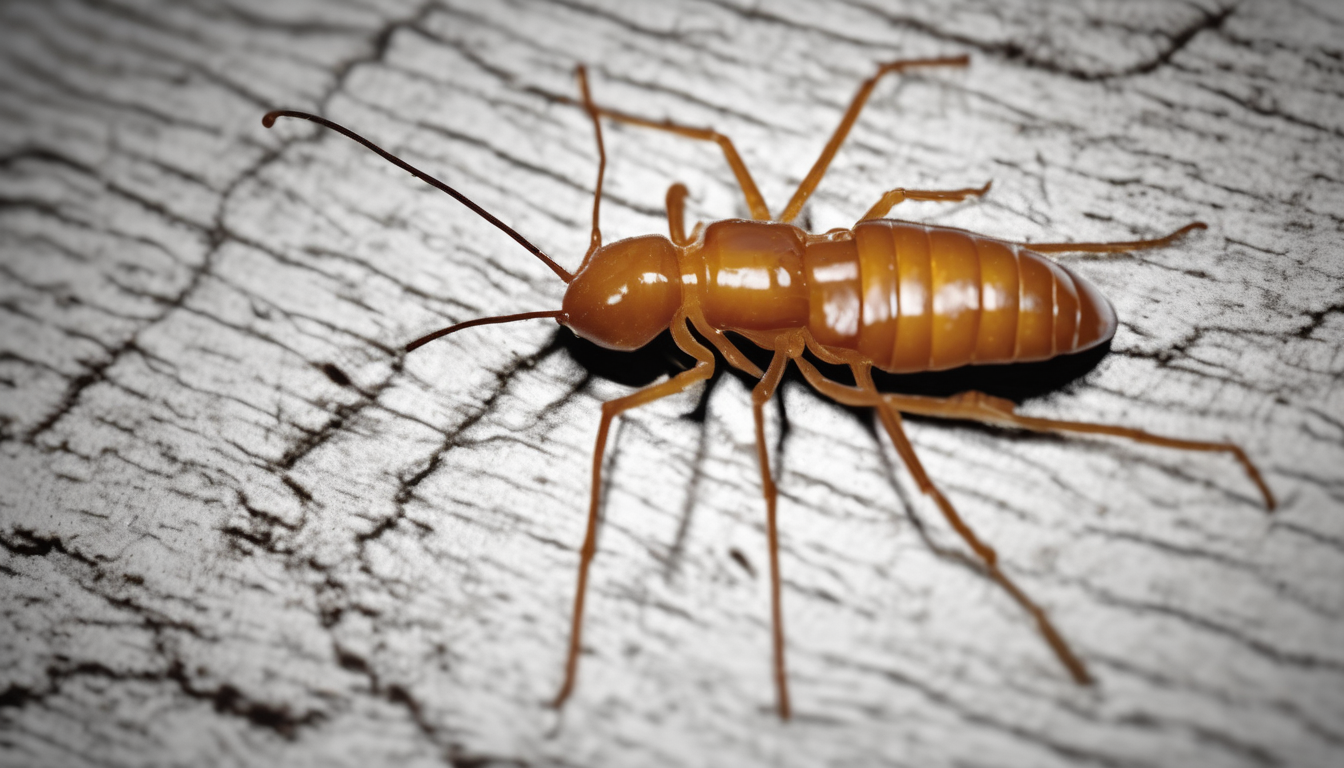

As Engr. Arnold M. Santiago, Head of Operations at Saniservice Dubai and known as the Termite Doctor of Dubai, I’ve spent over two decades battling subterranean termites in the UAE’s arid climate. Detecting Hidden Termite activity: thermal imaging, acoustic tools, and moisture mapping is essential for protecting villas in Emirates Hills, Palm Jumeirah, and beyond. These advanced techniques spot colonies before visible damage appears, potentially saving property owners AED 50,000 or more in repairs.
In Dubai’s desert environment, subterranean termites like Psammotermes hybostoma thrive on irrigation moisture, tunnelling up to 2 metres deep in sandy soils to reach wood. Traditional tapping or visual checks miss 70% of infestations hidden in walls or slabs. This how-to guide provides step-by-step instructions on detecting hidden termite activity: thermal imaging, acoustic tools, and moisture mapping, drawing from my field experience and proven tools.[1][2][4]
Subterranean termites in the UAE generate heat through metabolic activity, creating temperature differentials of 2-5°C detectable only by advanced tools. Their mud tubes retain high moisture, while colonies produce faint chewing sounds. Detecting hidden termite activity: thermal imaging, acoustic tools, and moisture mapping uncovers these signs non-destructively.[1][2][3]
In my Saniservice inspections across Dubai and Abu Dhabi, these methods have located nests in 90% of cases missed by visual checks. For waterfront villas in Palm Jumeirah, where irrigation feeds colonies, early detection prevents structural failure costing AED 100,000+.[4] Without them, termites silently consume timber framing for months.
Start with professional-grade equipment. For thermal imaging, use FLIR Exx-Series cameras with NETD under 40mK sensitivity to capture subtle 0.5°C differences from termite heat.[2][3][4] Acoustic tools include Terma-Trac devices or microphones detecting 20-200 Hz chewing vibrations.[1][5]
- Moisture meter: Pinless models like Tramex for 0-100% readings on walls and slabs.
- Thermal camera: Raythink or FLIR with AI super-resolution for UAE heat (up to 50°C ambient).
- Acoustic detector: Integrated systems combining sound and temperature for 97% accuracy.[5]
- Accessories: Laser rangefinder, compressed air canister, fibre optic scope, notepad for mapping.
Total kit costs AED 15,000-30,000, but pays off in one saved infestation. Rent for AED 500/day in Dubai.[1][3]
Preparation Requirements
Schedule inspections early morning (6-10 AM) when ambient temperatures are 20-30°C, maximising contrasts. Turn off air conditioning 2 hours prior. Inspect post-rain or irrigation cycles when termite activity peaks in UAE soils.[2]
Thermal imaging excels at spotting carton nests and mud tubes by their 3-7°C hotspots or cool moisture signatures.[1][4] Termites regulate gallery humidity at 80-90%, creating anomalies in dry Dubai walls.
- Scan exteriors: Hold camera 1-2 metres from foundations, expansion joints, and planters. Look for linear hotspots indicating mud tubes up slab penetrations. In Dubai villas, check irrigation-fed zones first.[2]
- Interior walls: Scan bottom 1 metre of drywall at 30 cm/s, palette on iron or white-hot. Hotspots (35-40°C) signal nests; cool streaks (2°C below ambient) show moist tubes.[4]
- Use cold air boost: Inject compressed air into suspect voids via exit holes. Cool galleries appear as 5°C drops on thermal images, revealing full infestation extent.[1]
- High ceilings: Extend pole-mounted camera for 5-10 metre reaches, common in Jumeirah towers.[2]
- Document: Capture images with laser distance markers. Analyse via FLIR Tools software for reports.[3]
In one Emirates Hills case, thermal imaging revealed a 2m² nest behind cladding, invisible to eyes.[1][7]
Termites chew at 50-150 Hz, audible through 30 cm of concrete. Acoustic tools filter noise for 93-97% accuracy when combined with thermal data.[5] Ideal for post-tension slabs in Sharjah villas.
- Select site: Target thermal hotspots or moisture anomalies from prior scans.
- Attach sensor: Place Terma-Trac probe on surface; record 30-60 seconds. Listen for rhythmic clicking over ambient hum.[1][5]
- Amplify: Use headphones and software to isolate frequencies. Vibrations drop sharply post-cold air injection if termites flee.[1]
- Confirm: Drill 5mm exploratory hole if signals exceed 80 dB; insert fibre scope for visuals.
- Map activity: Plot sound intensity gradients to trace colony size.
Environmental sensitivity limits use in high-vibration areas, but pairs perfectly with thermal imaging.[5]
Termites need 75%+ humidity; their tubes show 20-50% moisture in dry materials. Pinless meters map patterns non-destructively.[2] Critical in UAE where AC condensate attracts foragers.
- Baseline dry areas: Test known dry walls (under 12% moisture).
- Grid scan: Divide walls/floors into 50cm squares; log readings. Streaks over 16% indicate tubes.[1][2]
- Correlate: Overlay with thermal images; moist/hot zones confirm activity.
- Trace sources: Follow gradients to leaks, irrigation, or slabs. In Ajman, planters often spike readings to 30%.[4]
- Remap post-test: Verify after air injection; drops signal live termites.
Moisture mapping alone detects 60% of hidden activity; combined methods hit 95%.[1]
Integrating Thermal Imaging, Acoustic Tools, and Moisture Mapping for Complete Detection
Detecting hidden termite activity: thermal imaging, acoustic tools, and moisture mapping works synergistically. Start with thermal for broad scans, refine with moisture, confirm acoustically.[1][5] My three-zone protocol (structure, surroundings, context) ensures full coverage.
Workflow:
- Thermal scan (10 mins/area).
- Moisture grid (15 mins).
- Acoustic verification (5 mins/hotspot).
- Destructive proof if triple-positive.
This sequence located a Fujairah villa colony under pool decking, preventing AED 80,000 damage.[2][4]
UAE sandy soils allow shallow 0.5-1m tunnels; focus on drip lines and podium planters. Inspect during 35°C summers when nests heat most. For Ras Al Khaimah heritage sites, use low-sensitivity settings to avoid false positives from stone.[3]
- Check AC drips: Common 25% moisture spikes.
- Waterfront: Scan 3m around pools for tubes.
- Compliance: Dubai Municipality requires documented thermal reports for clearances.
Scanning in direct sun washes out thermal contrasts. Ignoring ambient over 40°C skews moisture baselines. Skipping integration misses false positives – e.g., rodent heat mimicking termites.[1][2] Always calibrate tools daily.
Train technicians on UAE termite cues: follow moisture from irrigation. Annual scans for villas cost AED 1,500, versus AED 200,000 repairs. Reference FLIR guides and PMC studies for protocols.[2][5]
Implement these steps for detecting hidden termite activity: thermal imaging, acoustic tools, and moisture mapping to safeguard your Dubai property. Contact Saniservice for professional audits – early detection saves fortunes.
