

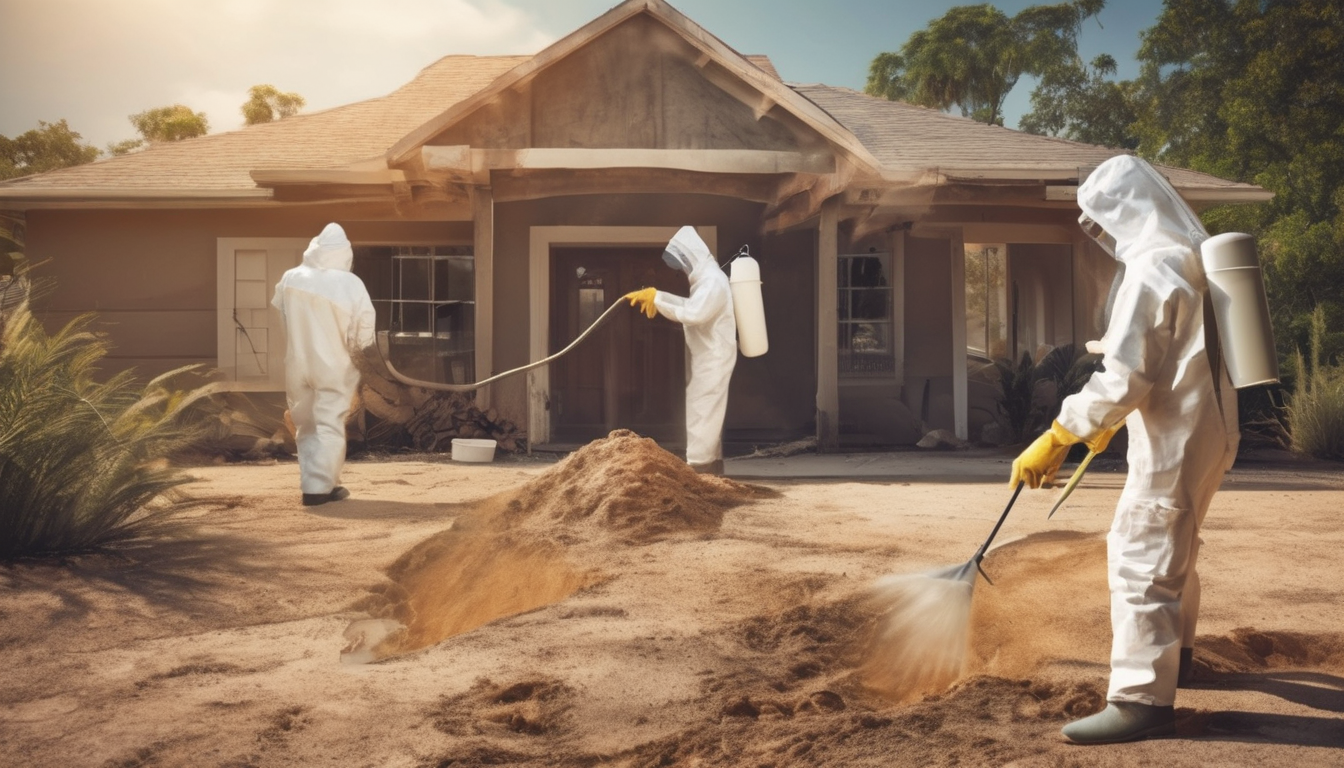

Determining What is the best chemical to remove termites from a house? depends on the termite species, infestation type (active gallery vs colony), building construction and local regulations; professional-use termiticides based on fipronil and imidacloprid (liquid soil barriers) and baiting systems using insect growth regulators or chitin synthesis inhibitors (for example noviflumuron or hexaflumuron) are the most reliably effective tools when used correctly by a licensed applicator.
This guide treats the question “What is the best chemical to remove termites from a house?” as a practical decision-making problem: which active ingredients and treatment systems perform best, how they are used, what safety and environmental issues to expect, and how these choices apply to UAE homes in Dubai, Abu Dhabi, Sharjah and other emirates.
Introduction — What is the best chemical to remove termites from a house?
Homeowners frequently ask, what is the best chemical to remove termites from a house? The natural desire is for a single “best” product, but termite control is a systems problem: eradication and prevention require appropriate chemistry plus correct application, access to the colony, and follow-up monitoring. Therefore, the best chemical is the one selected and applied within the correct treatment system for the site and termite species.
Throughout this guide I will compare leading termiticides, explain the science behind them, and provide UAE‑specific practical advice so property owners in Dubai, Abu Dhabi, Sharjah, Ajman, Fujairah and Ras Al Khaimah can decide what to request from their pest control provider.
How chemicals kill termites — modes of action
Understanding modes of action helps choose the right chemical for a job. Main mechanisms include:
- Neurotoxins — fast-acting compounds that disrupt nervous system function, causing quick mortality on contact or ingestion.
- Non-repellent slow-acting insecticides — designed to be undetectable so termites transfer the active ingredient through trophallaxis and grooming, spreading it through the colony before dying.
- Insect growth regulators (IGRs) — interfere with moulting or development, causing colony collapse over weeks to months while treated individuals continue to forage and transfer the material.
- Chitin synthesis inhibitors — prevent new cuticle formation in moulting individuals, leading to gradual mortality of immature castes and brood.
- Desiccants and botanical contact agents — damage the cuticle or act immediately but have limited residual and colony‑level effect unless used in combination with broader treatments.
What is the best chemical to remove termites from a house? — Top active ingredients
Below are the most commonly recommended actives for structural termite control with their strengths and limitations. No single active is universally “best”; selection depends on the treatment strategy.
Fipronil (e.g., Termidor, Taurus)
Fipronil is a non-repellent phenylpyrazole that blocks GABA‑gated chloride channels in insects’ nervous systems, causing hyperexcitation and death. It is widely used in professional liquid soil barrier formulations because it is highly transfer‑efficient; termites pick up the active and spread it to nestmates before dying, enabling colony elimination beyond the treated zone.
Advantages: high efficacy as an external soil barrier; strong evidence of colony elimination when properly applied; long residual in soil when applied per label.
Limitations: professional product only; careful mixing, trenching and rodding are required; environmental precautions are necessary near aquatic features.
Imidacloprid (neonicotinoids)
Imidacloprid is a systemic neonicotinoid that targets nicotinic acetylcholine receptors. It is used in both soil and localized treatments and can be effective as a non-repellent when formulated appropriately.
Advantages: effective with good transfer potential; used in both pre‑ and post‑construction treatments.
Limitations: environmental concerns have focused on pollinators in other contexts; choice of formulation and application method matters.
Chitin synthesis inhibitors and IGRs (hexaflumuron, noviflumuron)
These actives are used primarily in baiting systems; termites consume bait containing the compound and distribute it through the colony. Mortality is gradual as immature termites fail to moult properly, ultimately collapsing the colony.
Advantages: minimal environmental impact onsite, targeted to termites, no drilling or invasive soil trenching required for baiting systems.
Limitations: takes longer (weeks to months) to achieve full colony elimination; depends on termites accepting the bait and foraging to stations.
Bifenthrin, cypermethrin, permethrin (pyrethroids)
Synthetic pyrethroids are contact neurotoxins with immediate knockdown. Historically used for perimeter and wood treatments, they can be useful for spot treatments and pre-construction barriers.
Advantages: fast knockdown and relatively low cost.
Limitations: many pyrethroid formulations are repellent to termites or degrade faster in Gulf soils; non-repellent alternatives are generally preferred for colony elimination.
Borates / boric acid / sodium borate
Borate salts (applied to timber as a pre‑treatment or remediation) disrupt termite digestion and are useful as preventive wood treatments or for localized remedial work in exposed timbers and joinery.
Advantages: low mammalian toxicity, long-term protection when correctly applied to exposed wood.
Limitations: not effective for subterranean colonies that maintain continuous moisture access; borates do not protect wood hidden beneath finishes unless applied pre-installation or via invasive access.
Botanical oils (orange oil, neem-based)
Essential oils such as d‑limonene (orange oil) can kill exposed termites on contact and can be useful for localized wood treatment or drying-out situations.
Advantages: relatively low toxicity to humans; marketed for spot treatment of drywood infestations.
Limitations: limited penetration and residual; not effective for subterranean termite colonies in soil without integrated treatment.
Liquid barriers vs bait systems — answering what is the best chemical to remove termites from a house?
Choosing “the best chemical” often reduces to selecting between two system types: liquid termiticides (soil barriers) and bait systems. Each uses different chemistries and serves slightly different roles.
Liquid soil barrier systems (commonly fipronil or imidacloprid)
Method: trenching around slab or foundation, applying a diluted termiticide and backfilling; rodding through concrete slabs to create a continuous treated zone where necessary.
When it answers “what is the best chemical to remove termites from a house?”: Liquid non‑repellent termiticides such as fipronil are often considered the best choice when immediate colony suppression and a continuous protective barrier are required, particularly in heavily landscaped UAE villas that create constant termite pressure.
Pros: rapid suppression of foraging activity, strong residual protection, ability to treat difficult plumbing penetrations by rodding and void injection.
Cons: requires excavation/trenching and professional equipment; costlier upfront; environmental precautions near ponds or drainage.
Baiting systems (IGRs or chitin synthesis inhibitors)
Method: install monitoring/bait stations around the property. When termites feed and accept bait, the active ingredient (IGR or chitin inhibitor) is carried back into the colony.
When it answers “what is the best chemical to remove termites from a house?”: Bait systems using hexaflumuron, noviflumuron or similar actives are frequently the best choice for targeted colony elimination with minimal chemical use and low environmental impact—especially when access for soil drenching is limited or when a non-invasive solution is required in occupied high-end villas and heritage properties.
Pros: targeted, minimal disturbance, safe near structures and occupants, long-term monitoring capability.
Cons: slower elimination timeline; needs committed monitoring and servicing; not ideal alone in cases of extensive structural damage requiring fast remediation.
Choosing based on infestation type and structure
Answering “what is the best chemical to remove termites from a house?” requires diagnosing the infestation type:
Subterranean termite infestation (common in irrigated UAE gardens)
Recommended approach: professional liquid barrier with a non‑repellent (fipronil or imidacloprid) plus targeted spot treatments for galleries inside timber, and/or baiting around the perimeter for colony removal and monitoring.
Drywood termite infestation (less common in Gulf but possible in imported joinery)
Recommended approach: localized wood treatment (borate, direct application of botanical oils or foams) or structural fumigation if infestation is widespread in furnished units.
Infestation in waterfront or poolside properties
Recommended approach: baiting systems are often safer near water; if liquid treatments are necessary, select label-approved actives and follow environmental buffer rules to protect aquatic systems.
High-value heritage timber or interior joinery
Recommended approach: minimally invasive techniques—borate treatment, heat, localized injection foams, and baiting—preferred over broad soil drenching to preserve finishes and comply with conservation constraints.
Safety, environmental and regulatory considerations in the UAE
In the UAE, professional pest companies must comply with local regulations for pesticide importation, storage and application. Homeowners should insist on licensed applicators who provide Material Safety Data Sheets (MSDS) and treatment warranties.
Key safety points:
- Professional application reduces exposure risks and ensures correct dilution, rodding and residual management.
- AED pricing for treatments should include labour, materials and warranty — see cost section below for typical ranges.
- Caution near irrigation systems, ponds and drains: some termiticides require environmental buffers or different application strategies.
- For occupied buildings, baiting systems and borate wood treatments are often chosen for lower occupant exposure and minimal disruption.
Costs & estimates for UAE properties (AED)
Exact price depends on property size, complexity and chosen system. Typical UAE ranges (indicative only):
- Initial inspection and report: AED 300–1,000 depending on scope and diagnostic tools used (moisture mapping, thermal imaging).
- Liquid soil barrier (professional fipronil/imidacloprid application) for a villa: AED 4,000–12,000 AED depending on perimeter length, rodding needs and re‑treatment warranty.
- Baiting system installation (Sentricon-style or other monitored bait stations) and first-year servicing: AED 3,000–10,000 AED depending on number of stations and monitoring frequency.
- Localized borate treatment or interior wood injection: AED 500–4,000 AED depending on area treated and access.
- Emergency fumigation for drywood infestations (if required): varies widely — usually AED 5,000+ for apartments or larger for villa-scale fumigation logistics.
These ranges reflect regional practice: always request a written proposal with a detailed scope, treated active ingredient names, MSDS and warranty terms in AED.
Common mistakes — why “what is the best chemical to remove termites from a house?” is not a single answer
Common errors by homeowners and inexperienced contractors:
- Relying solely on surface sprays that will not reach subterranean colonies.
- Choosing repellent actives for soil barriers — these can divert foragers away from bait stations and prevent colony-level transfer.
- Skipping moisture source correction. If irrigation leaks or condensate lines feed the colony, chemicals alone will not prevent reinfestation.
- Using DIY products for large infestations — professional formulations and techniques (trenching, rodding, monitored baiting) are necessary for reliable colony elimination.
Therefore, the best chemical is the one integrated into the correct technical response: a non‑repellent liquid for perimeter protection when invasive access is acceptable and rapid response needed, or a baiting IGR/chitin inhibitor when minimal chemistry and targeted colony elimination are preferred.
expert-tips-key-takeaways”>Expert tips & key takeaways
From experience working across Dubai and the UAE, here are actionable recommendations:
- Ask your provider: “Which active ingredient are you using and why?” — insist on product names (for example Termidor = fipronil) and MSDS documentation.
- For irrigated villas, prioritise perimeter liquid non‑repellent treatment (fipronil or imidacloprid) combined with moisture/landscape fixes to remove the termite food/water source.
- For heritage interiors and high-end joinery, prefer baiting and borate wood treatments to avoid damaging finishes and reduce chemical exposure indoors.
- Ensure warranty coverage and monitoring. A written termite warranty tied to scheduled inspections is the single best post-treatment protection for Dubai properties.
- Regularly inspect imported timber and new joinery before installation — prevention beats cure, and borate pre‑treatment of exposed wood is cost-effective.
Conclusion — What is the best chemical to remove termites from a house?
To answer directly: there is no single universal chemical that fits every case of “What is the best chemical to remove termites from a house?” However, for most subterranean termite problems in UAE homes, non‑repellent liquid termiticides based on fipronil or imidacloprid used by professionals as a continuous soil barrier (or combined with targeted baiting) are the most effective and reliable solutions; for targeted, low‑impact colony elimination and sensitive sites, bait systems containing IGRs or chitin synthesis inhibitors are the best chemical option. The correct choice must be guided by a detailed inspection, moisture/pathway correction and a licensed applicator’s prescription.
If you would like, I can prepare a tailored checklist for inspections in Dubai‑area villas (including where to request rodding, station placement and irrigation checks) or draft questions to vet pest control contractors and compare written proposals in AED.
