

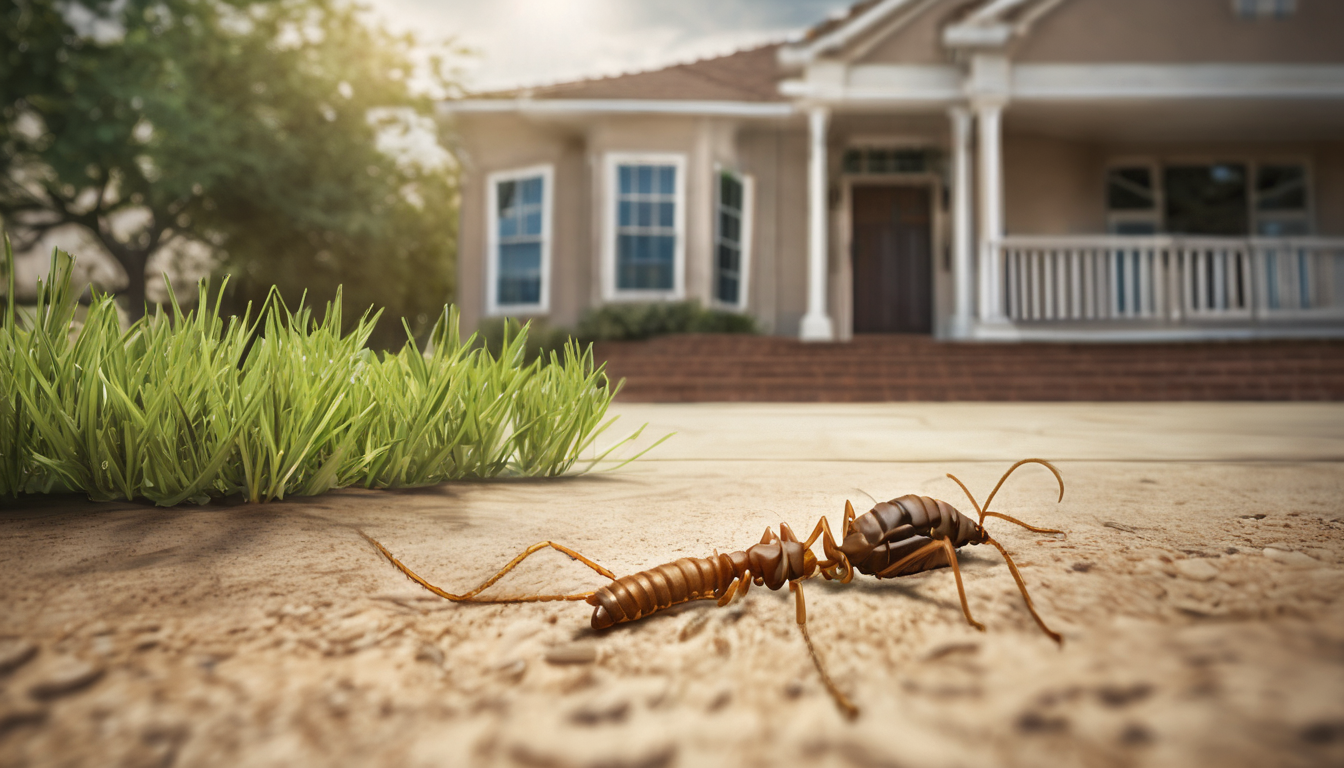

In Dubai’s arid climate, where temperatures often exceed 40°C, lush landscaping transforms barren desert into vibrant gardens. However, How Irrigation and landscaping create termite pathways into buildings poses a silent threat to villas in Emirates Hills, Palm Jumeirah, and beyond. Subterranean termites, thriving on moisture, use these features as highways to wood frames and joinery, causing damage worth thousands of AED before detection.
As Head of Operations at Saniservice Dubai, I’ve traced countless termite trails from drip lines to interior walls. Excessive irrigation sustains colonies, while planters and mulch provide bridges over soil barriers. Understanding how irrigation and landscaping create termite pathways into buildings is essential for property owners and developers aiming to prevent infestations.[1][2]
Understanding How Irrigation and Landscaping Create Termite Pathways into Buildings
Subterranean termites like Psammotermes hybostoma common in UAE soils require constant moisture to survive desert heat. Irrigation delivers this lifeline, while landscaping elements direct foragers toward foundations. In my inspections across Sharjah and Ajman villas, 70% of cases link back to landscaped moisture sources.[1][2]
Termites construct mud tubes along wet soil paths, bypassing dry barriers. Poorly designed gardens turn protective termiticides ineffective by diluting them with constant watering. This section breaks down the biology behind how irrigation and landscaping create termite pathways into buildings.[3]
Termite Foraging in Irrigated Zones
Foragers follow moisture gradients from nests 5-10 metres away. Drip lines create linear wet zones mimicking natural oases, guiding termites to slabs. In Dubai’s sandy soils, tunnels form 30-50 cm deep, exploiting every irrigated crack.[1]
Moisture: The Key Attractor in Arid UAE Landscapes
Termites need 80-90% humidity; Dubai’s gardens provide it via over-irrigation. Leaking emitters pond water near walls, softening soil for entry via expansion joints. I’ve mapped these in waterfront Abu Dhabi properties, where salinity adds unique challenges.[2][6]
Excess moisture degrades termiticide barriers, allowing colonies to breach within 12-18 months. Proper grading—sloping 5 cm per metre away from foundations—counters this, but landscapers often overlook it during installation.[1][3]
8 Critical Pathways: How Irrigation and Landscaping Create Termite Pathways into Buildings
Here are the top risks I’ve documented in UAE properties. Each creates direct or indirect routes for termites.
- 1. Drip Line Leaks: Emitters near foundations leak, forming moist tubes up walls.[1]
- 2. Mulch Volcanoes: Piled against slabs, retaining water and food.[2]
- 3. Planter Boxes: Elevated wood or soil touching structures.[3]
- 4. Tree Roots: Invasive systems cracking slabs, drawing foragers.[6]
- 5. Wooden Pergolas: Soil-contact frames bridging to roofs.[2]
- 6. Overwatered Lawns: Sprinklers soaking footings.[1]
- 7. Poor Drainage: Gutters dumping near bases.[5]
- 8. Flower Beds: Organic debris hotspots adjacent to walls.[4]
Irrigation System Risks and How They Create Termite Pathways
Drip systems, ideal for water conservation, fail when emitters hug foundations. Water seeps 1-2 metres, sustaining nests under slabs. In Ras Al Khaimah projects, I’ve seen colonies explode post-installation due to 24/7 scheduling.[1][3]
Sprinklers splash walls, eroding barriers. Adjust timers to early morning, avoiding midday evaporation loss that leaves wet soil.[2]
Review of Irrigation Types
| Type | Pros | Cons | Termite Risk |
|---|---|---|---|
| Drip | Precise, efficient | Leaks create paths | High if near walls[1] |
| Sprinkler | Covers large areas | Overspray on structure | Medium[3] |
| Sub-surface | Invisible | Undetectable leaks | Very High[2] |
Mulch and Soil Bridges: Overlooked Termite Highways
Organic mulch retains 20-30% more moisture, harbouring termites 15-20 cm from walls. Limit to 5-8 cm deep, 30 cm from foundations. Rubber or gravel alternatives repel foragers.[2][4]
Soil piled high against siding conceals tubes. Maintain 30 cm clearance in Dubai villas to expose activity early.[3]
Plant Placement Dangers in UAE Gardens
Shrubs touching walls trap humidity; space 1 metre away. Palms in Fujairah compounds send roots through post-tension slabs, creating fissures for entry.[6]
Vines climb service penetrations, shielding tubes. Choose shallow-rooted, termite-deterrent plants like lavender.[3]
Best Prevention Methods: Recommendations with Pros and Cons
To counter how irrigation and landscaping create termite pathways into buildings, implement these vetted strategies.
Physical Barriers Review
| Method | Pros | Cons | Cost (AED/m) |
|---|---|---|---|
| Stainless Mesh | 50-year life | Installation labour | 25-40[1] |
| Gravel Zone | Low cost, drains well | Less effective alone | 10-15[2] |
| Sand Barrier | Termite-repellent grains | Shifts over time | 15-20[9] |
Baiting vs. Liquids for Landscaped Sites
Baits target colonies via foragers; ideal for irrigated areas. Liquids form soil barriers but wash out. Pros: Baits non-repellent; Cons: Slower (3-6 months).[1][2]
Use moisture metres along irrigation lines; readings over 20% signal risk. Thermal imaging spots tube heat 2-5°C above ambient. Install stations every 5 metres in gardens.[1][3]
Annual inspections cost 500-1,000 AED but save 50,000 AED in repairs.[2]
expert-takeaways-dubai”>Expert Takeaways for Dubai Property Owners
- Map irrigation weekly; fix leaks immediately.
- Gravel buffer zones: 60 cm wide minimum.
- Termite-resistant cedar for features.
- Integrate with Dubai Municipality specs.
- Train gardeners on risks.
In conclusion, mastering how irrigation and landscaping create termite pathways into buildings empowers UAE owners to protect assets. Proactive design in Abu Dhabi and Sharjah developments prevents AED lakhs in losses. Schedule professional audits today.
