

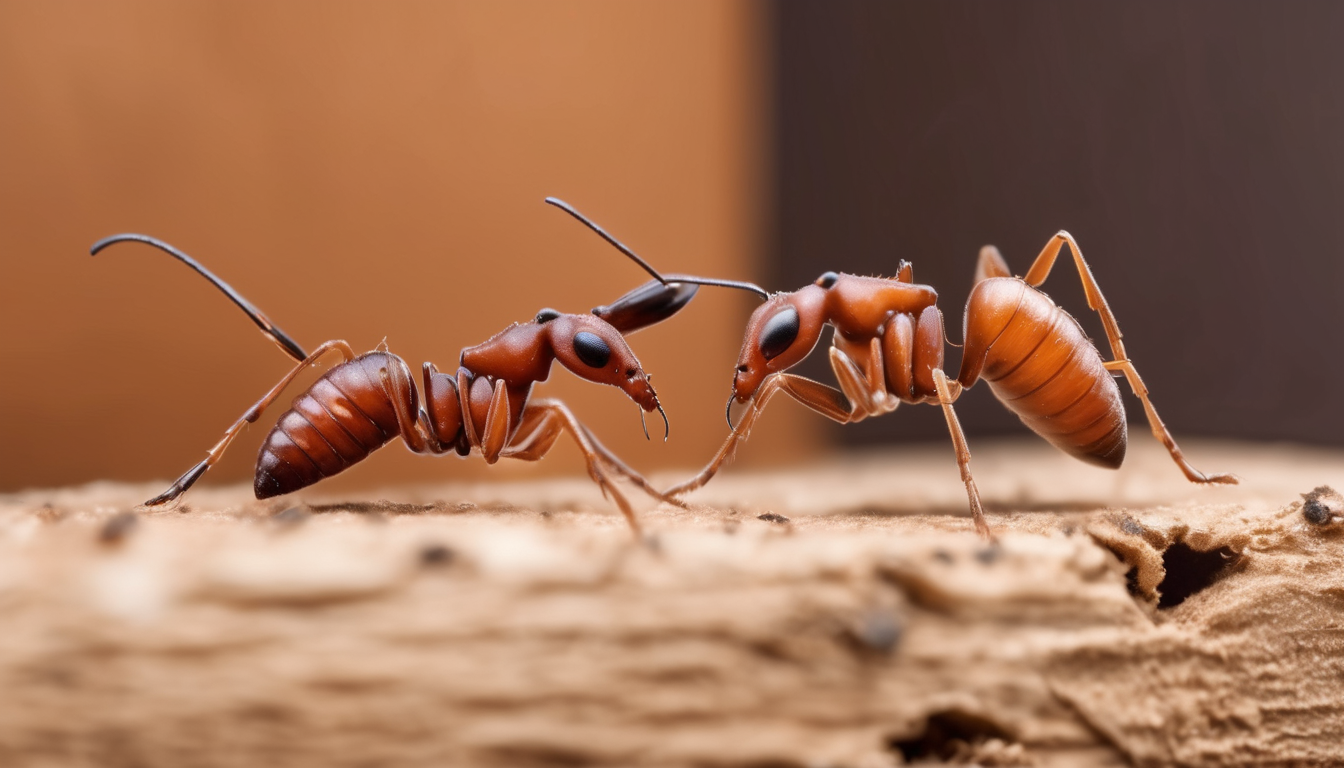

Differentiating ants from termites in UAE homes presents unique challenges that require careful observation and understanding of local conditions. In Dubai’s harsh climate, both ants and termites have developed specific adaptations that can make identification difficult for property owners. The consequences of misidentification can be significant—applying ant treatments to termite infestations or vice versa leads to wasted resources and continued structural damage. This comprehensive guide provides the technical knowledge needed for accurately Differentiating Ants from termites in UAE homes based on my field experience across thousands of Dubai properties.
The process of differentiating ants from termites in UAE homes begins with understanding that these insects occupy different ecological niches despite superficial similarities. Termites in Dubai primarily attack structural wood and cellulose materials, while ants typically seek food sources and moisture. However, the lines blur when carpenter ants damage wood or when termites swarm during specific seasons. Property owners across Dubai, Abu Dhabi, and Sharjah frequently confuse these pests, particularly when discovering winged insects or finding frass around their homes.
This guide covers the essential techniques for differentiating ants from termites in UAE homes, including anatomical differences, behavioral patterns, damage characteristics, and treatment considerations specific to Middle Eastern conditions. You will learn how to conduct proper inspections, interpret evidence correctly, and understand when professional assessment becomes necessary for protecting your property investment.
Differentiating Ants From Termites In Uae Homes – Anatomical Differences for Identification
Differentiating ants from termites in UAE homes begins with understanding their fundamental anatomical differences. Termites possess straight antennae that resemble tiny beads strung together, while ants have elbowed antennae with a distinct bend. The waist structure provides another key identifier—termites have a broad waist without constriction between thorax and abdomen, whereas ants exhibit a pinched, narrow waist that creates clear segmentation.
Winged reproductive forms cause the most confusion during swarming seasons. Termite swarmers have four wings of equal length that extend well beyond their abdomen when at rest, and these wings detach easily after mating flights. Ant swarmers feature two pairs of wings with the front wings noticeably longer than the hind wings. The wings remain attached after mating and do not break off as readily as termite wings.
Body Coloration and Size Variations
In UAE conditions, termites typically appear pale white to light brown with soft-bodied appearance, while ants range from dark brown to black with harder exoskeletons. Worker termites measure 3-6 mm in length and avoid light exposure, whereas ants vary from 2-15 mm depending on species and frequently forage in visible areas. These anatomical distinctions provide the foundation for differentiating ants from termites in UAE homes before considering behavioral patterns.
Differentiating Ants From Termites In Uae Homes – Behavioral Patterns in UAE Conditions
Differentiating ants from termites in UAE homes requires observing their distinct behavioral patterns shaped by Dubai’s unique environment. Termites maintain hidden colonies with protected mud tubes connecting their underground nests to food sources, avoiding light exposure entirely. They work continuously through wood with the grain, consuming cellulose material from the inside out. Ants establish visible trails between food sources and their nests, traveling openly along edges and surfaces.
Moisture relationships differ significantly between these pests in UAE conditions. Termites require constant moisture contact and will die within hours if exposed to Dubai’s dry air, which explains their mud tube construction and preference for damp wood. Ants seek moisture but can survive drier conditions, often appearing around water sources like irrigation lines, condensate drains, or leaky fixtures without the same moisture dependency that characterizes termite behavior.
Swarming Behavior and Timing
Swarming patterns provide critical clues for differentiating ants from termites in UAE homes. Termites typically swarm after rain events during spring and autumn months when humidity levels rise temporarily. Their mating flights occur during daylight hours and involve thousands of individuals simultaneously. Ants swarm during summer months in Dubai, often in the evening or night, with smaller numbers of individuals participating. Finding discarded wings near windowsills or light fixtures indicates termite activity, while ant swarmers typically retain their wings longer.
Differentiating Ants From Termites In Uae Homes – Damage Characteristics and Evidence
Differentiating ants from termites in UAE homes through damage assessment requires understanding their distinct destruction patterns. Termite damage appears as honeycombed wood with soil/mud packing in galleries, often following the wood grain while leaving a thin surface veneer intact. They produce fecal pellets that are uniform in size and shape, typically accumulating in small piles near infestation sites. Termites never leave sawdust-like material behind—their digestion process converts wood into these distinctive pellets.
Carpenter ant damage presents as clean, smooth galleries carved across the wood grain without soil or mud packing. They eject coarse sawdust-like material called frass that contains insect parts and wood fragments mixed together. This frass accumulation differs markedly from termite pellets in texture and composition. Ant damage typically occurs in moist, decaying wood rather than sound dry wood, which helps in differentiating ants from termites in UAE homes where both moisture problems and dry construction exist.
Structural Evidence Patterns
Mud tubes on foundations and walls provide definitive evidence of subterranean termites in Dubai properties. These pencil-width tubes protect termites from desiccation and predators while maintaining humidity. Ants do not construct mud tubes but may establish visible foraging trails along edges. Hollow-sounding wood when tapped indicates termite damage, while ant damage may produce rustling sounds if colonies are active. These evidence patterns are essential for differentiating ants from termites in UAE homes during initial inspections.
UAE Species Commonly Confused
Differentiating ants from termites in UAE homes requires familiarity with local species that homeowners frequently mistake for each other. The desert subterranean termite (Psammotermes hybostoma) represents the most destructive termite species in Dubai, often confused with pavement ants (Tetramorium species) due to similar size and coloration. Carpenter ants (Camponotus species) found in UAE properties damage moist wood and are routinely misidentified as termites despite their anatomical differences.
Ghost ants (Tapinoma melanocephalum) and pharaoh ants (Monomorium pharaonis) common in Dubai households are sometimes mistaken for termite swarmers due to their small size and pale coloration. However, their ant characteristics become apparent under magnification. Flying ants during summer months cause particular confusion when they emerge in large numbers, leading to mistaken termite alarms. Understanding these local species improves accuracy when differentiating ants from termites in UAE homes.
Regional Distribution Patterns
Termite pressure varies across UAE emirates with higher activity in communities with extensive landscaping and irrigation. Dubai Marina, Palm Jumeirah, and Arabian Ranches show elevated termite activity due to soil moisture conditions, while ant infestations occur throughout all urban areas. Differentiating ants from termites in UAE homes must consider these geographical patterns—termites favor specific microclimates created by human habitation, while ants adapt to diverse urban environments.
Inspection Techniques for Dubai Homes
Differentiating ants from termites in UAE homes requires systematic inspection techniques adapted to local construction methods. Begin with exterior perimeter inspection focusing on soil-wood contacts, irrigation systems, and foundation penetrations. Use a flashlight and probing tool to examine potential entry points, paying particular attention to expansion joints, utility penetrations, and planter boxes that contact structure. These areas frequently reveal evidence crucial for differentiating ants from termites in UAE homes.
Interior inspections should concentrate on moisture-prone areas: kitchens, bathrooms, laundry rooms, and under sinks. Check wooden structures for hollow sounds when tapped and look for mud tubes along foundation walls. Use moisture meters to identify damp wood that might attract either pest. For suspected termite activity, carefully probe wood with a screwdriver to check for hollowed galleries and mud packing. These techniques provide the physical evidence needed for accurate identification.
Monitoring and Documentation
Maintain detailed records of sightings including date, location, number of insects, and conditions observed. Photograph insects, damage, and evidence with scale references for later analysis. Setting up monitoring stations with preferred food sources can help attract and identify pests—termites prefer cellulose materials while ants respond to protein or sugar baits. This documentation approach supports proper differentiating ants from termites in UAE homes over time rather than relying on single observations.
Treatment Approaches and Considerations
Differentiating ants from termites in UAE homes becomes critically important when selecting treatment methods because incorrect approaches prove ineffective and wasteful. Termite treatments require soil applications of non-repellent termiticides, baiting systems, or physical barriers that protect the entire structure. These treatments typically cost between AED 2,500 to AED 8,000 for Dubai villas depending on size and infestation severity. Ant treatments involve bait placements, residual sprays, or dust applications targeting foraging trails and nesting sites.
Chemical treatments differ significantly between these pests. Termiticides like fipronil and imidacloprid create protective barriers in soil that termites cannot detect, while ant baits use slow-acting insecticides transferred through colony grooming. Using ant sprays against termites merely kills visible workers without affecting the hidden colony, while termite treatments often miss ant colonies that require different approaches. This makes proper differentiating ants from termites in UAE homes essential before any treatment commitment.
Prevention Strategies
Preventive measures also differ between these pests. Termite prevention focuses on moisture control, soil treatment during construction, and maintaining physical separation between wood and soil. Ant prevention involves sealing entry points, managing food sources, and reducing moisture availability. Understanding these distinctions helps homeowners implement appropriate preventive measures after correctly differentiating ants from termites in UAE homes.
When to Seek Professional Assessment
Differentiating ants from termites in UAE homes requires professional assessment when evidence remains ambiguous or when significant damage is suspected. Professional pest control companies in Dubai employ trained technicians who use specialized tools like borescopes, moisture meters, and infrared cameras to detect hidden activity. They can accurately identify species based on microscopic examination and understand local behavior patterns that affect treatment decisions.
Seek professional assessment when discovering winged insects indoors, finding mud tubes on foundations, or noticing structural damage to wood elements. Professional inspections typically cost AED 300 to AED 600 in Dubai and provide documented reports with identification confirmation and treatment recommendations. This investment proves valuable when differentiating ants from termites in UAE homes remains challenging for property owners.
Choosing Qualified Professionals
Select pest control companies with specific experience in termite management and proper licensing from Dubai Municipality. Ask about their identification process, treatment methodologies, and warranty offerings. Reputable companies will provide clear explanations of their findings and recommendations rather than immediately proposing expensive treatments. This due diligence ensures proper differentiating ants from termites in UAE homes before committing to treatment programs.
Expert Tips for Homeowners
Successfully differentiating ants from termites in UAE homes requires adopting specific practices developed through field experience. First, collect multiple specimens for comparison—termites and ants often coexist in properties, so finding both doesn’t necessarily indicate misidentification. Use clear tape to capture insects without damaging them, then examine under good lighting with magnification if possible.
Second, focus on moisture management regardless of which pest is present. Fixing leaks, improving drainage, and reducing humidity eliminates attractants for both ants and termites in Dubai’s climate. Third, maintain detailed records of sightings with dates and locations to identify patterns over time. Finally, when in doubt, consult professionals before applying treatments—incorrect chemicals can complicate proper identification and increase ultimate treatment costs.
Frequently Asked Questions
How quickly should I respond when finding either pest?
Immediate response is crucial for termites due to their rapid damage potential, while ants typically allow more time for assessment. Termite colonies work continuously and can cause significant structural damage within months, while ant infestations develop more slowly.
Can I use the same treatment for both pests?
No, termites and ants require completely different treatment approaches. Termite treatments target soil barriers and colony elimination, while ant treatments focus on baiting and trailing patterns. Using the wrong treatment wastes resources and delays proper control.
Are DIY treatments effective for either pest in UAE conditions?
DIY treatments rarely succeed against termites due to their hidden colonies and specialized control requirements. Ant treatments sometimes respond to DIY approaches but often require professional intervention for complete elimination, especially with multiple nesting sites.
Differentiating ants from termites in UAE homes remains an essential skill for property protection. By understanding anatomical differences, behavioral patterns, and damage characteristics specific to Dubai conditions, homeowners can make informed decisions about pest management. When uncertainty persists, professional assessment provides the technical expertise needed to safeguard your investment against these distinct but commonly confused pests.
