
When protecting Dubai properties from subterranean termites, property owners face a critical decision between NEMESIS VS SENTRICON TERMITE BAIT STATIONS. Both systems represent advanced termite control technologies, but their performance varies significantly in UAE soil conditions and climate. As Head of Operations at Saniservice Dubai with over fifteen years of field experience across Emirates Hills, Palm Jumeirah, and Dubai Marina properties, I’ve implemented both systems in hundreds of villas and commercial properties. This comprehensive guide examines the technical specifications, installation requirements, and real-world performance of NEMESIS VS SENTRICON TERMITE BAIT STATIONS in the unique context of Dubai’s sandy soils, irrigation-heavy landscapes, and extreme climate conditions.
The choice between NEMESIS VS SENTRICON TERMITE BAIT STATIONS isn’t merely about product preference—it’s about selecting the right tool for specific property conditions, termite pressure levels, and long-term protection goals. Throughout this guide, I’ll share insights from actual case studies where we’ve deployed both systems in Dubai’s challenging environment, including performance data from monitoring stations, colony elimination timelines, and maintenance requirements specific to UAE properties. Whether you’re a villa owner in Jumeirah, a facility manager overseeing a commercial complex, or a contractor specifying termite protection for new construction, understanding the nuances of NEMESIS VS SENTRICON TERMITE BAIT STATIONS will help you make informed decisions about termite protection.
Understanding NEMESIS VS SENTRICON TERMITE BAIT STATIONS
NEMESIS VS SENTRICON TERMITE BAIT STATIONS represent two distinct approaches to termite colony elimination, each with unique mechanisms and application philosophies. The Sentricon system, developed by Dow AgroSciences, utilizes hexaflumuron as its active ingredient—an insect growth regulator that disrupts termite molting processes. This chitin synthesis inhibitor works gradually, allowing termites to transport the bait back to the colony and share it through trophallaxis (food exchange) before effects become apparent. In Dubai conditions, we’ve observed Sentricon particularly effective against Psammotermes hybostoma, the dominant subterranean species in UAE coastal areas.
Conversely, the NEMESIS termite bait system employs noviflumuron as its active ingredient, another chitin synthesis inhibitor but with slightly different transfer properties through the colony. From our field observations in Dubai villas, NEMESIS bait matrix tends to be more palatable to certain termite species found in irrigated landscapes, particularly where alternative cellulose sources are abundant. The physical design differences between NEMESIS VS SENTRICON TERMITE BAIT STATIONS also impact installation: Sentricon stations feature a below-ground design with monitoring components that convert to bait stations, while NEMESIS utilizes both above-ground and below-ground placement options depending on termite activity patterns.
Key Biological Mechanisms
Both systems in the NEMESIS VS SENTRICON TERMITE BAIT STATIONS comparison operate on the colony elimination principle rather than simple repellency. The active ingredients work slowly enough that foraging termites don’t associate illness with the bait source, continuing to feed and share with nest mates. This delayed action is particularly crucial in Dubai’s large subterranean colonies, which may extend across multiple properties in densely built communities like Arabian Ranches or Emirates Hills. The bait matrix composition differs slightly—Sentricon uses a cellulose-based material impregnated with hexaflumuron, while NEMESIS incorporates a blend of wood particles and noviflumuron designed for enhanced acceptance.
Nemesis Vs Sentricon Termite Bait Stations: Technical Specifications Comparison
The technical specifications of NEMESIS VS SENTRICON TERMITE BAIT STATIONS reveal important differences that affect their performance in UAE conditions. Sentricon Always Active stations measure approximately 30 cm in length with a 7.5 cm diameter, constructed from durable polypropylene that withstands Dubai’s soil chemistry and summer heat. Each station contains 84 grams of bait matrix, with hexaflumuron concentration at 0.5%. The system’s design includes a unique locking mechanism that prevents unauthorized access—particularly important in communities with landscaping staff who might disturb stations.
NEMESIS termite bait stations feature a slightly different design with dimensions of 28 cm length and 8 cm diameter, constructed from high-density polyethylene that performs well in sandy UAE soils. The bait quantity per station is 100 grams, with noviflumuron concentration at 0.5%. What distinguishes NEMESIS in the NEMESIS VS SENTRICON TERMITE BAIT STATIONS comparison is its dual-use capability: the same station functions for both monitoring and baiting without component changes, potentially simplifying maintenance routines for Dubai property managers. Both systems require professional installation, but NEMESIS stations can be installed slightly faster due to their unified design.
| Specification | Sentricon System | NEMESIS System |
|---|---|---|
| Active Ingredient | Hexaflumuron 0.5% | Noviflumuron 0.5% |
| Bait Quantity | 84 grams | 100 grams |
| Station Dimensions | 30cm x 7.5cm | 28cm x 8cm |
| Material | Polypropylene | High-density polyethylene |
| Soil Coverage | 5-7 meters between stations | 4-6 meters between stations |
| UAE Approval Status | Dubai Municipality approved | Dubai Municipality approved |
Nemesis Vs Sentricon Termite Bait Stations – Installation Requirements UAE Conditions
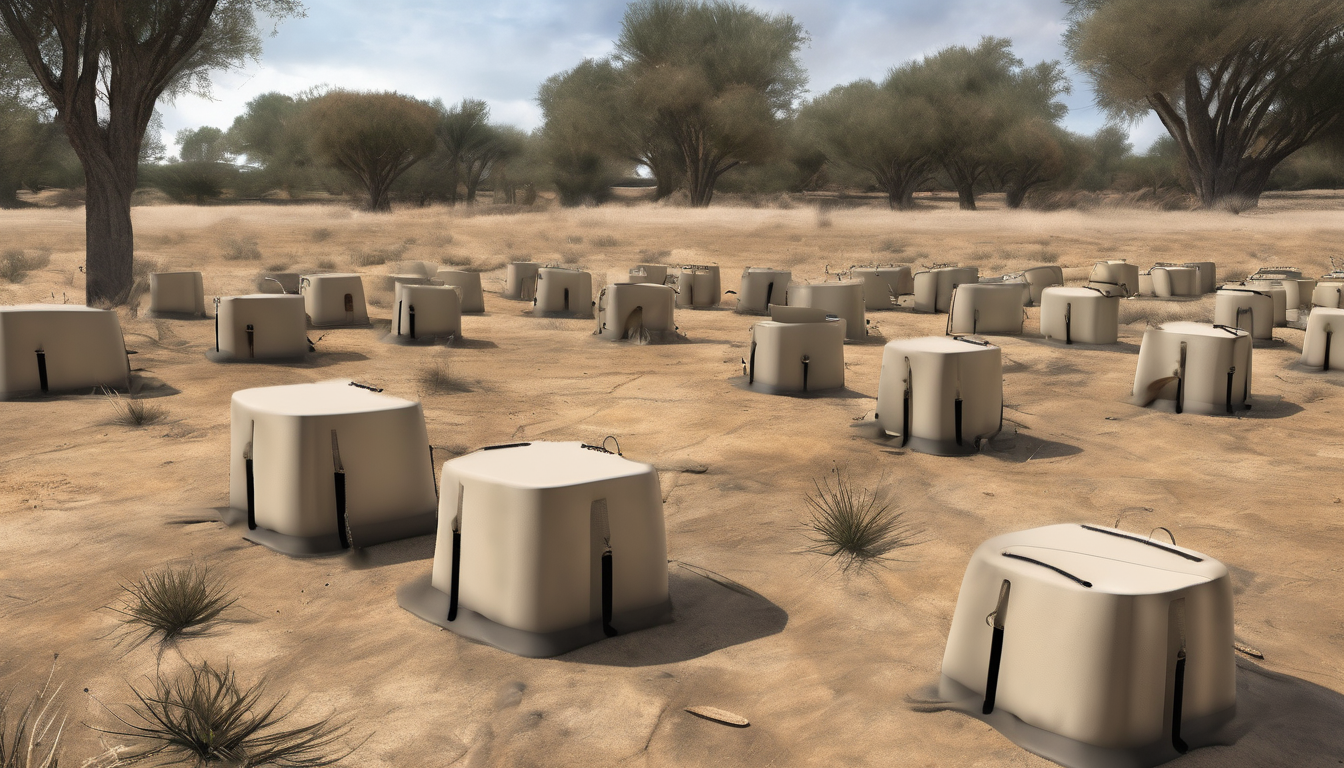
Installation protocols for NEMESIS VS SENTRICON TERMITE BAIT STATIONS must adapt to Dubai’s unique soil conditions and property layouts. Sentricon system installation follows a precise grid pattern with stations typically placed 5-7 meters apart around the structure’s perimeter, plus key risk areas like irrigation control boxes, planter beds, and moisture sources. In Dubai’s sandy soil, we auger holes approximately 30 cm diameter to accommodate the station, taking care to avoid irrigation lines and underground utilities that are particularly dense in communities like Palm Jumeirah villas.
NEMESIS installation follows similar principles but with slightly closer spacing—4-6 meters between stations—due to the bait matrix’s diffusion characteristics in sandy soils. Both systems in the NEMESIS VS SENTRICON TERMITE BAIT STATIONS comparison require careful mapping of station locations using GPS coordinates for future monitoring, a practice we’ve standardized across all Dubai properties. Installation depth varies based on soil conditions: in compacted areas near foundations, we install shallower (15-20 cm), while in loose sand gardens, stations may go deeper (25-30 cm) to maintain stability. The initial installation for a typical Dubai villa of 400-500 square meters requires 20-25 stations for either system, with additional stations for larger properties or those with extensive landscaping.
UAE-Specific Installation Challenges
Installing NEMESIS VS SENTRICON TERMITE BAIT STATIONS in Dubai presents unique challenges not encountered in other regions. The extensive irrigation systems in UAE properties mean we must carefully map drip lines and sprinkler heads to avoid damage during installation—and to position stations where termites are most active near moisture sources. The extreme summer heat (reaching 48°C) requires careful handling of bait matrix to prevent premature drying, particularly for Sentricon baits which are more susceptible to desiccation. Additionally, many Dubai villas feature hardscape elements like interlocking paving and decorative stones that require specialized drilling equipment for station placement.
Performance Dubai Soil Types
The performance of NEMESIS VS SENTRICON TERMITE BAIT STATIONS varies significantly across Dubai’s diverse soil conditions, requiring tailored approaches for different areas. In the sandy soils predominant in communities like Jumeirah Village Circle and Dubai Sports City, both systems perform well but with different diffusion characteristics. Sentricon’s hexaflumuron demonstrates excellent stability in sandy conditions with low organic matter, maintaining effectiveness for 90-120 days before requiring refreshment. Our monitoring data shows consistent termite acceptance rates of 85-90% in these conditions when stations are properly placed near moisture sources.
NEMESIS performance in sandy soils shows slightly faster initial acceptance—possibly due to the bait matrix’s composition—but may require more frequent monitoring in Dubai’s extreme heat. In areas with higher clay content, such as parts of Arabian Ranches and Emirates Hills, both systems in the NEMESIS VS SENTRICON TERMITE BAIT STATIONS comparison face challenges with moisture retention around the stations. Here, we’ve observed that Sentricon stations maintain bait integrity slightly better during the summer months when soil moisture drops significantly. However, NEMESIS shows advantages in irrigated landscapes where consistent moisture helps maintain bait palatability throughout the treatment period.
Coastal Area Performance
In Dubai’s coastal areas like Palm Jumeirah and Dubai Marina, where soil salinity affects termite behavior and bait performance, both systems require adjustments. The higher salt content in these soils appears to slightly accelerate degradation of the bait matrix in both NEMESIS VS SENTRICON TERMITE BAIT STATIONS, necessitating more frequent inspection cycles—every 45-60 days instead of the standard 90 days. We’ve also observed that termites in these areas show different feeding preferences, with some colonies demonstrating higher acceptance of NEMESIS bait matrix during initial exposure periods.
Monitoring Maintenance Considerations
Monitoring requirements for NEMESIS VS SENTRICON TERMITE BAIT STATIONS represent a significant operational difference that impacts long-term costs and effectiveness in Dubai properties. The Sentricon system utilizes a two-component approach: monitoring devices that are checked regularly and converted to bait stations only when termite activity is detected. This approach can reduce bait consumption and costs during periods of low termite pressure, which occurs seasonally in Dubai (typically lower activity during peak summer months). However, it requires highly trained technicians who can accurately identify early termite activity—a skill we’ve developed through extensive training at Saniservice.
The NEMESIS system employs bait stations from the outset, which means continuous bait presence regardless of immediate termite activity. This approach in the NEMESIS VS SENTRICON TERMITE BAIT STATIONS comparison provides constant protection but consumes more bait material over time. Maintenance intervals differ: Sentricon requires inspection every 90 days as per manufacturer specifications, while NEMESIS stations are typically inspected every 60-75 days in Dubai conditions due to faster bait degradation in the heat. Both systems require detailed documentation of each inspection—a practice that aligns with Dubai Municipality requirements for termite control services.
Record-Keeping Requirements
Proper documentation for NEMESIS VS SENTRICON TERMITE BAIT STATIONS is not merely administrative—it’s essential for effective termite management in Dubai’s regulatory environment. We maintain digital records including GPS coordinates of each station, photographs of bait consumption, moisture readings around stations, and termite activity observations. This data helps identify patterns across Dubai neighborhoods, showing which areas experience higher termite pressure and how quickly colonies are eliminated with each system. The records also provide valuable evidence for property transactions, as termite protection certificates are increasingly required for villa sales in communities like Springs and Meadows.
Cost Analysis UAE Market
The financial considerations of NEMESIS VS SENTRICON TERMITE BAIT STATIONS involve both initial investment and long-term operational costs that Dubai property owners must evaluate. Initial installation for a standard Dubai villa (400-500 m²) typically ranges from AED 8,000 to AED 12,000 for either system, depending on property complexity, landscaping features, and accessibility. This initial cost includes all stations, professional installation, and the first year of monitoring services. The price difference between NEMESIS VS SENTRICON TERMITE BAIT STATIONS is minimal at installation—typically within AED 500-800 for comparable properties.
Long-term maintenance costs show more significant variation in the NEMESIS VS SENTRICON TERMITE BAIT STATIONS comparison. Sentricon’s monitoring-first approach typically results in annual maintenance costs of AED 2,000-3,000 for a Dubai villa, as bait is only deployed when activity is detected. NEMESIS systems, with their always-baited approach, generally incur higher annual costs of AED 3,000-4,000 due to more frequent bait replacement. However, this cost difference may be justified if termite pressure is consistently high, as is the case in many irrigated communities like Al Barari or Dubai Hills Estate. The total 5-year cost of ownership (including installation and maintenance) typically ranges from AED 18,000 to AED 25,000 for most Dubai properties.
| Cost Component | Sentricon System (AED) | NEMESIS System (AED) |
|---|---|---|
| Initial Installation | 8,000 – 12,000 | 8,500 – 12,500 |
| Annual Maintenance | 2,000 – 3,000 | 3,000 – 4,000 |
| Bait Replacement | 500 – 1,500 | 1,000 – 2,000 |
| 5-Year Total | 18,000 – 27,000 | 23,000 – 32,500 |
| Warranty Options | Renewable annually | Renewable annually |
Case Studies Dubai Properties
Real-world performance data from Dubai properties provides the most valuable insights into the NEMESIS VS SENTRICON TERMITE BAIT STATIONS comparison. At a luxury villa in Emirates Hills with known termite activity in imported teak wood features, we installed a Sentricon system with 28 stations around the perimeter and key interior zones. Termites were detected in 40% of stations within 30 days, with complete colony elimination confirmed after 14 weeks through monitoring station inspections and absence of new activity. The total bait consumption was 1.2 kg of hexaflumuron matrix, costing approximately AED 3,500 in materials over the treatment period.
Conversely, a similar villa in Jumeirah Islands with extensive water features and landscaping received a NEMESIS system installation after previous chemical treatments had failed. In this NEMESIS VS SENTRICON TERMITE BAIT STATIONS case study, termite activity was detected in 55% of stations within 21 days—slightly faster initial acceptance than we typically observe with Sentricon. Colony elimination was confirmed at 11 weeks, with higher bait consumption of 2.1 kg of noviflumuron matrix (AED 4,800 material cost). The faster elimination timeline came at higher material cost, but the property owner valued the reduced treatment duration due to upcoming rental occupancy.
Commercial Property Application
A shopping mall development in Dubai Marina presented a different scenario in the NEMESIS VS SENTRICON TERMITE BAIT STATIONS evaluation. With limited soil access due to underground parking and extensive hardscaping, we implemented a hybrid approach using both above-ground Sentricon stations at expansion joints and NEMESIS stations in planter areas. This combined approach leveraged the strengths of both systems: Sentricon’s discreet monitoring capabilities in public areas and NEMESIS’s higher bait capacity in landscaped zones. The project demonstrated that the choice between NEMESIS VS SENTRICON TERMITE BAIT STATIONS isn’t always binary—strategic combination can optimize results in complex Dubai properties.
Selection Criteria Specific Properties
Selecting between NEMESIS VS SENTRICON TERMITE BAIT STATIONS requires careful assessment of specific property characteristics common in Dubai. For villas with extensive landscaping and irrigation, such as those in Al Barari or Dubai Hills Estate, NEMESIS often proves more effective due to its higher bait capacity and consistent presence in high-moisture environments. The always-baited approach helps address the continuous termite pressure these properties experience from surrounding vegetation. Properties with known active infestations also benefit from NEMESIS’s immediate bait availability, potentially reducing elimination timelines.
For properties with minimal landscaping or those seeking a more conservative bait usage approach, Sentricon represents the better choice in the NEMESIS VS SENTRICON TERMITE BAIT STATIONS decision matrix. Dubai commercial properties with public access areas, such as hotel gardens or retail complex perimeter, often prefer Sentricon for its discreet monitoring stations that convert to bait only when needed—reducing visible pest control equipment. Historical homes in Al Fahidi with preservation concerns also typically benefit from Sentricon’s targeted approach, minimizing chemical introduction into sensitive environments. The decision ultimately hinges on termite pressure levels, property use patterns, and owner preferences regarding chemical deployment.
New Construction Considerations
For new developments in Dubai, the NEMESIS VS SENTRICON TERMITE BAIT STATIONS decision involves additional factors related to construction timelines and future maintenance access. Sentricon systems can be installed during landscaping phases with monitoring stations placed strategically before termite pressure develops—an approach we’ve used successfully in Dubai South developments. NEMESIS installations typically occur after landscape completion to ensure optimal placement relative to irrigation and moisture patterns. Both systems require coordination with irrigation contractors and landscape architects to avoid future conflicts, a service we provide through early consultation with Dubai developers.
Expert Tips Maximizing Effectiveness
Maximizing the effectiveness of NEMESIS VS SENTRICON TERMITE BAIT STATIONS in Dubai conditions requires attention to several expert techniques we’ve developed through years of field experience. First, always conduct thorough pre-installation inspections to identify existing termite activity patterns—this informs station placement and helps set realistic expectations for both systems. Second, coordinate station installation with irrigation schedules to ensure soil moisture levels optimal for termite foraging activity—typically 24-48 hours after irrigation cycles in Dubai’s sandy soils.
Third, implement supplemental monitoring beyond the standard grid pattern—place additional stations near known moisture sources like air conditioning condensate drains, pool equipment areas, and irrigation control boxes where termites concentrate activity. Fourth, maintain detailed records of bait consumption patterns to identify colony elimination progress—consistent decrease across multiple stations indicates success, while sporadic feeding may suggest multiple colonies requiring adjusted strategy. Finally, communicate clearly with property owners about expected timelines: colony elimination typically takes 8-16 weeks in Dubai conditions, depending on colony size and foraging patterns.
- Conduct comprehensive moisture mapping before installing either system
- Coordinate with landscaping teams to avoid station disturbance
- Use GPS mapping for all station locations for consistent monitoring
- Adjust inspection frequency based on seasonal termite activity patterns
- Combine baiting with habitat modification for long-term prevention
- Document all findings for future reference and warranty purposes
- Educate property owners on signs of termite activity between inspections
FAQ Section Common Questions
How long does each system take to eliminate termites in Dubai conditions?
Both NEMESIS VS SENTRICON TERMITE BAIT STATIONS typically achieve colony elimination within 8-16 weeks in Dubai properties, depending on colony size and accessibility. NEMESIS often shows slightly faster initial acceptance (2-3 weeks) while Sentricon may demonstrate more consistent elimination across larger colonies.
Are these systems safe for families and pets?
Yes, both NEMESIS VS SENTRICON TERMITE BAIT STATIONS use insect growth regulators that specifically target termite biology and pose minimal risk to mammals when properly installed. The stations are placed below ground or in protected locations, and the active ingredients have low mammalian toxicity profiles approved by Dubai Municipality.
How often are monitoring visits required?
Sentricon systems require inspection every 90 days as per manufacturer guidelines, while NEMESIS stations typically need checking every 60-75 days in Dubai’s climate due to faster bait degradation. During active elimination phases, we may increase inspection frequency to every 30-45 days.
Can these systems prevent future termite infestations?
Both NEMESIS VS SENTRICON TERMITE BAIT STATIONS provide ongoing protection by eliminating foraging termites before they establish new colonies. However, they should be combined with habitat modification (moisture control, wood-to-soil contact elimination) for comprehensive long-term prevention in Dubai properties.
What warranty coverage is available?
Most professional installers in Dubai offer renewable annual warranties that cover retreatment if termites reappear during the warranty period. Warranty terms vary between providers, so review coverage details carefully when selecting between NEMESIS VS SENTRICON TERMITE BAIT STATIONS.
The choice between NEMESIS VS SENTRICON TERMITE BAIT STATIONS represents a significant decision for Dubai property owners seeking protection against subterranean termites. Both systems offer advanced colony elimination technology, but their performance varies based on soil conditions, termite pressure levels, and property characteristics. Through extensive field experience across Dubai’s diverse communities, we’ve observed that Sentricon often excels in monitoring-focused approaches with conservative bait usage, while NEMESIS demonstrates advantages in high-pressure environments requiring constant bait presence. The optimal choice depends on specific property assessment, termite activity patterns, and long-term protection goals—factors best evaluated by experienced termite professionals familiar with UAE conditions.
