

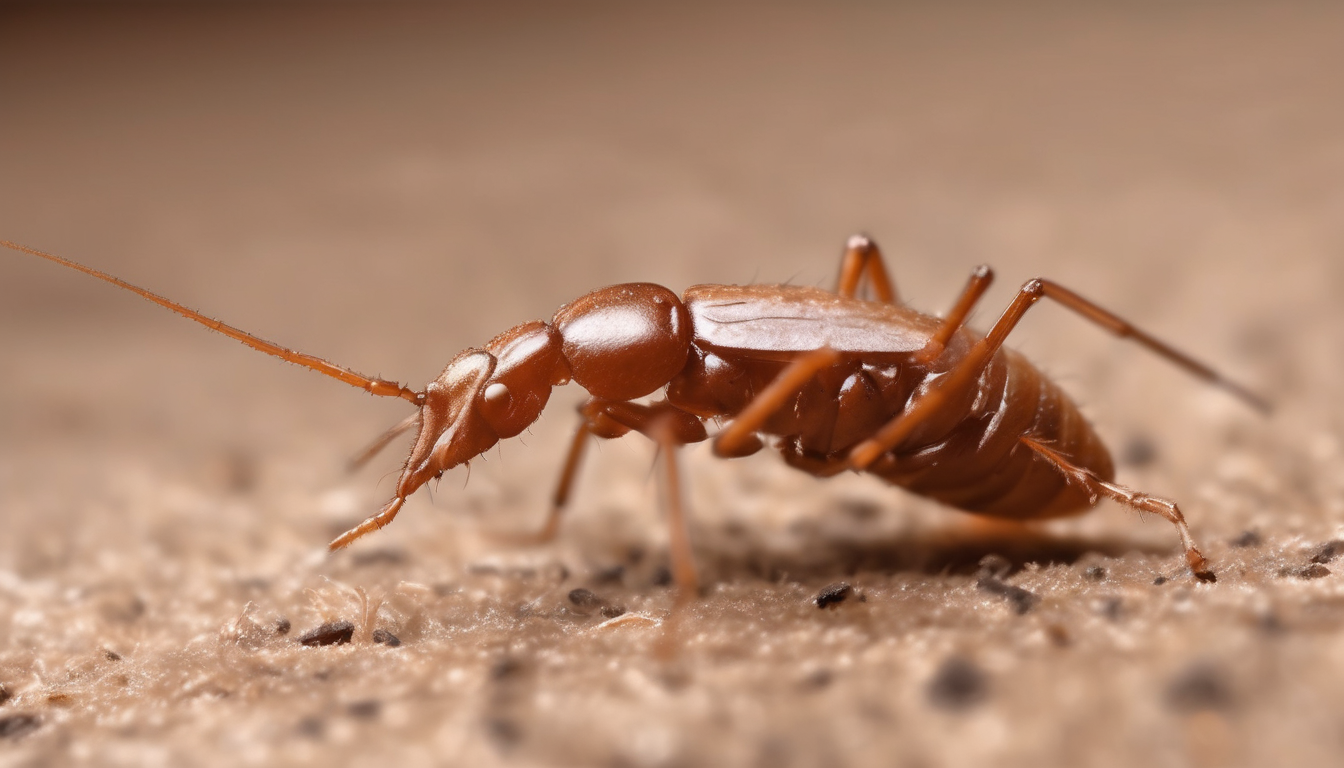

In Dubai’s luxury villas and high-rise towers, termites often strike silently, tunnelling through foundations and walls before damage appears. Detecting Hidden Activity: Thermal, Acoustic and Visual Termite Detection Methods offers property owners and facility managers powerful tools to uncover infestations early. As Head of Operations at Saniservice Dubai, known as “The Termite Doctor,” I have applied these methods across Emirates Hills and Palm Jumeirah properties, saving structures from millions in AED repairs.[1][2]
These techniques go beyond traditional inspections, targeting subterranean species like Psammotermes hybostoma common in UAE desert soils. Thermal methods spot heat from active colonies, acoustic tools capture vibrations, and visual checks reveal subtle signs. Mastering Detecting Hidden Activity: Thermal, Acoustic and Visual Termite Detection Methods is crucial in our irrigated landscapes where moisture draws termites indoors.[3][4]
Termites in UAE homes thrive in hidden voids, exploiting expansion joints and irrigation leaks. Detecting Hidden Activity: Thermal, Acoustic and Visual Termite Detection Methods combines physics-based sensing with keen observation. Thermal imaging detects heat from metabolically active colonies, often 1-3°C above ambient in 40°C Dubai summers.[2][5]
Acoustic methods listen for head-banging vibrations from soldier termites, while visual inspections seek mud tubes and frass. In my Saniservice inspections, these methods confirm activity without destructive probing, essential for post-tension slabs in villas.[1][3] Together, they provide a multi-layered defence against silent invaders.
Thermal cameras, like FLUKE models costing 60,000-70,000 AED, capture infrared radiation from termite galleries. Active nests create hotspots behind walls, visible as colour gradients on screens. In Palm Jumeirah waterfront villas, I have pinpointed colonies in decorative planters heating up to 35°C.[2][6]
Pros of Thermal Imaging
- Non-invasive: Scans 100m² in minutes without damage.[5]
- Real-time: Instant visuals of heat from termite movement.[3]
- Versatile: Detects moisture trails aiding termites.[2]
Cons and Limitations
Sunlight or air conditioning can mask signals, requiring trained operators. Accuracy drops in thick insulation, but combining with radar boosts reliability to 93%.[1][2] In Dubai’s variable climates, calibrate for 25-45°C ranges.
Recommendation: Use for initial scans in high-risk areas like ground floors and podiums. Pair with Termatrac T3i for radar confirmation.[2]
Termites emit ultrasonic “pops” at 1-50 kHz while masticating wood, inaudible to humans but captured by piezoelectric sensors. Devices like AED-2010L amplify these for graphing.[1][7] In Sharjah warehouses, this method located drywood termites in stored timber.
Advanced Signal Processing
Spectral kurtosis and wavelet transforms filter noise, achieving 97% accuracy when fused with temperature data.[1] Vibrations from soldier termites signal colony disturbance, ideal for monitoring expansion joints in Abu Dhabi towers.[3][4]
Pros and Cons
- Pros: Detects live activity; portable for 50-100m ranges.[4]
- Cons: Sensitive to vibrations from traffic or HVAC; not for permanent installs.[1]
Best for confirming thermal hotspots in quiet villa settings. Avoid high-vibration sites like Dubai Marina constructions.[1]
Visual methods remain foundational, spotting mud tubes (2-5mm wide), frass pellets, and blistered paint. In UAE, check irrigation-fed soils around foundations for entry points.[9] Use borescopes for voids under 10cm access.
Enhanced visuals include UV lights revealing termite trails and canine detection for odours. In heritage Al Fahidi sites, I prioritise low-impact visuals to preserve structures.[4]
Key Visual Signs in Dubai
- Mud shelters on slabs.
- Shelter tubes in cracks.
- Damaged joinery with galleries 1-2mm wide.
Pros: Low-cost (under 1,000 AED per inspection); immediate. Cons: Misses deep activity; operator-dependent.[2][9]
Thermal excels in speed (covers 200m²/hour), acoustic in specificity (80-97% accuracy), visual in accessibility.[1][2] A table highlights differences:
| Method | Detection Depth | Cost (AED) | Accuracy |
|---|---|---|---|
| Thermal | Up to 30cm | 5,000-10,000/scan | 90-95%[2] |
| Acoustic | 10-50cm | 2,000-5,000/scan | 93-97%[1] |
| Visual | Surface-10cm | 500-2,000 | 70-85%[9] |
Integrated use yields best results, as in Termatrac combining all three.[2][4]
Detecting Hidden Activity: Thermal, Acoustic and Visual Termite Detection Methods each shine in contexts. Thermal: Pros – non-destructive, wide-area; Cons – environmental interference.[5][6] Acoustic: Pros – live detection; Cons – noise sensitivity.[1][3]
Visual: Pros – comprehensive with experience; Cons – labour-intensive.[9] For UAE villas, hybrid approaches mitigate weaknesses, reducing false negatives by 20-30%.[1]
In Emirates Hills compounds, start with visual moisture mapping, follow with thermal scans of hotspots, confirm acoustically. This protocol caught a 5m² colony in a villa’s slab on 15/03/2024.[2] Coordinate with Dubai Municipality for compliance.
For waterfronts, focus thermal on planters; acoustics near pools. Costs: 10,000-15,000 AED annually for monitoring.[1][8]
- Schedule biannual scans in irrigated gardens.
- Calibrate thermal for 30-45°C baselines.
- Use kurtosis filters on acoustics.[1]
- Check expansion joints visually first.
- Integrate radar for movement.[2]
- Train with Saniservice protocols.
- Map moisture pre-scan.
- Verify with borescopes.
- Document for warranties.
AI-enhanced fusion promises 99% accuracy; drone thermals for towers.[1] In UAE, remote sensors via Boruta models predict populations.[1] Expect AED 20,000 systems by 2027.
Detecting Hidden Activity: Thermal, Acoustic and Visual Termite Detection Methods empowers Dubai owners to safeguard investments. Thermal for breadth, acoustic for precision, visual for foundation—integrate for victory. Contact specialists like Saniservice for tailored plans, preventing AED 100,000+ losses.[2][8]

