

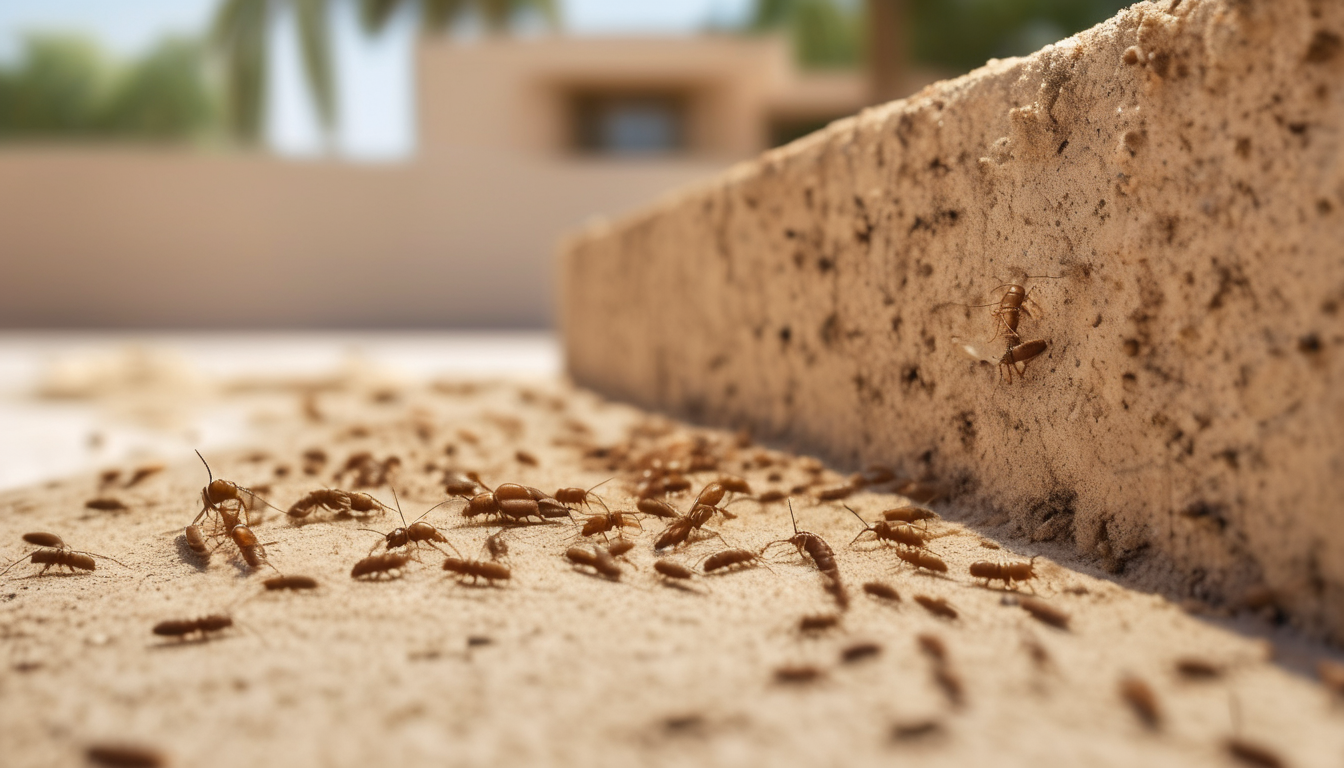

Termite bait installation for Dubai villas: site prep, timelines and regulatory costs is a specialised, evidence‑led service that blends inspection, site preparation, station installation and ongoing monitoring; costs vary widely depending on villa size, soil conditions, bait technology and regulatory compliance. This guide breaks down realistic AED cost ranges, explains required site prep and timelines, and shows what owners should budget for warranties and five‑year maintenance.
Understanding Termite bait installation for Dubai villas: site prep, timelines and regulatory costs
Termite bait installation for Dubai villas: site prep, timelines and regulatory costs describes the full service from diagnostic inspection through placement of ground stations or in‑soil monitoring, and the ongoing servicing that completes an integrated termite management programme. In Dubai and neighbouring Emirates, baiting is frequently offered as an alternative or complement to liquid barriers and is valued for colony‑level control and low surface chemical use.
Termite Bait Installation For Dubai Villas: Site Prep, Timelines And Regulatory Costs – Why use bait systems for Dubai villas?
Bait systems offer targeted, slower‑acting active ingredients (Insect Growth Regulators or toxicants) that are transferred through trophallaxis to reduce or eliminate colonies rather than only repelling termites from a treated barrier. For villas with landscaped gardens, decorative planters or complex foundations, baiting reduces the need for intrusive trenching and is often preferred for occupied, high‑end properties.
Termite Bait Installation For Dubai Villas: Site Prep, Timelines And Regulatory Costs – Site preparation steps and inspection requirements
Correct site preparation is often decisive for bait effectiveness and affects final cost. Termite bait installation for Dubai villas: site prep, timelines and regulatory costs relies on several preparatory stages.
1. Detailed property inspection
- Full perimeter survey of foundations, patios, planters and service penetrations using moisture meters and visual inspection to map termite tubes and wood damage.
- Identify irrigation lines, condensate drains and ponding zones that create termite pathways.
2. Moisture and pathway mitigation
Before bait stations are fully effective, common issues should be mitigated: adjust irrigation schedule, repair leaks, remove timber touching soil, and clear organic mulch that attracts termites. These changes are often recommended and may be performed by the homeowner or quoted as add‑ons by the contractor.
3. Station placement planning
Bait station locations depend on colony activity and soil access: typical spacing around Dubai villas is every 3–4 m where activity is confirmed, with denser placement near planters, pools and utility corridors. Poorly chosen locations reduce uptake and prolong timelines.
Timelines for termite bait installation and colony elimination
Timelines differ by species, colony size, bait uptake and environmental conditions. Typical phases and realistic durations are described below.
Phase 1 — Inspection and site prep
Duration: 1–5 days. Includes survey, moisture mapping and homeowner approvals for any repairs or access work.
Phase 2 — Station installation
Duration: 1–3 days for a standard villa (labour to excavate small holes, set stations and record GPS locations). Larger villas or complex landscapes can take longer.
Phase 3 — Monitoring and baiting cycle
Duration: 1–6 months (initial bait uptake) — once termites feed, technicians replace monitoring matrices with bait cartridges. Colony suppression can be detected in 3–12 months depending on species and bait technology.
Phase 4 — Confirmation and warranty activation
Duration: 6–12 months to confirm colony elimination and establish a maintenance schedule. Many warranties become active after a 12‑month confirmation period.
Cost components and pricing breakdown
Termite bait installation for Dubai villas: site prep, timelines and regulatory costs is driven by these primary cost components:
- Inspection fee: initial survey with moisture mapping and report.
- Site‑prep and repairs: irrigation fixes, drainage improvements, timber removal or access works.
- Materials: bait stations, bait cartridges, stakes, tools and records (branded systems cost more).
- Labour: field technician hours for installation and subsequent monitoring visits.
- Monitoring & maintenance: scheduled visits (commonly quarterly initially, then biannual), cartridge replacements and record‑keeping.
- Regulatory compliance and certification: Dubai Municipality paperwork, contractor licence verification and any permit fees where required.
- Warranty and administrative fees: documentation, extended warranty options and transfer fees for resale.
Pricing table example for Dubai villas
The table below shows typical ranges for villas in Dubai. Actual quotes vary by company, villa size and infestation history. All prices listed in AED. This relates directly to Termite Bait Installation For Dubai Villas: Site Prep, Timelines And Regulatory Costs.
| Item | Typical range (AED) | Notes |
|---|---|---|
| Initial inspection & report | 500 – 1,200 AED | Includes moisture map and baseline photos |
| Station installation (standard 3‑4 bed villa, 12–20 stations) | 3,000 – 8,000 AED | Includes stations, labour and first monitoring visit |
| Site repairs / moisture mitigation | 500 – 10,000+ AED | Small fixes AED 500–2,000; major drainage/irrigation work higher |
| Quarterly monitoring visits (per visit) | 300 – 800 AED | Often charged per visit; some packages include first year |
| Bait cartridge replacement (per cartridge) | 50 – 250 AED | Depends on brand and active ingredient |
| One‑year service package (installation + 4 visits) | 4,000 – 12,000 AED | Common packaged offering with limited warranty |
| Extended 3–5 year warranty & monitoring | 6,000 – 20,000 AED | Price depends on visit frequency and guaranteed response times |
Comparing bait brands and technology: cost vs effectiveness
Brands such as Sentricon (widely used internationally) and proprietary systems from major pesticide companies command premiums for proven track records and rigorous monitoring protocols. Locally supplied bait cartridges and generic systems may be cheaper but differ in long‑term data and warranty backing.
Factors that influence brand cost
- Active ingredient (IGR vs non‑repellent toxins) — IGRs often cost more but reduce reproduction.
- Station design and durability — locking, tamper‑resistant stations cost more but are safer in family gardens.
- Data and reporting technology — GPS, digital logs and remote sensors add to cost but improve transparency.
Cost vs effectiveness guidance
Higher upfront cost for branded systems often buys rigorous monitoring protocols and transferable warranties that increase resale value and insurer confidence. Cheaper systems can work for low‑pressure sites if paired with excellent inspection and mitigation work.
Long‑term maintenance, warranties and 5‑year cost projections
Owners must budget not only for installation but for ongoing maintenance. Termite bait installation for Dubai villas: site prep, timelines and regulatory costs should therefore include a 5‑year projection.
Typical 5‑year cost model (example for a 350–500 m² villa)
- Year 0 (inspection + installation): 5,000 – 12,000 AED
- Year 1–5 (monitoring visits, cartridge replacements, minor repairs): 1,200 – 3,000 AED per year
- Five‑year total (conservative): 11,000 – 27,000 AED
Higher totals (20,000–40,000 AED) occur where site repairs, high station densities or premium warranty packages are selected. Owners should request a written 5‑year estimate that itemises visit frequency, response time for active infestations and replacement cartridge costs.
Regulatory fees and certification requirements in the UAE
Contractors working in Dubai and other Emirates must be licensed and compliant with local municipal rules; this drives part of the cost and influences customer safety and warranty validity. Companies often advertise Dubai Municipality certification or equivalent approvals, which is important for legal compliance and insurance acceptance.
Common regulatory considerations
- Use of Ministry‑approved pesticides and documented Safety Data Sheets (SDS).
- Licensed applicators and company registrations (papers should be shown with quotes).
- Work permits for certain intrusive treatments and documented waste disposal of spent cartridges.
These compliance costs are normally built into professional quotes; ask your contractor to itemise any municipality fees or permit costs so you can compare like‑for‑like proposals. When considering Termite Bait Installation For Dubai Villas: Site Prep, Timelines And Regulatory Costs, this becomes clear.
Practical tips for homeowners and final remarks
- Request a written scope that separates inspection, installation, repairs and annual maintenance so you can compare quotes easily.
- Verify contractor licences and ask for proof of Dubai Municipality or UAE approvals; uncertified providers are often cheaper but risk warranty voiding.
- Prioritise moisture mitigation—treating the habitat often reduces overall cost and improves bait success.
- Ask about warranty transfer if you plan to sell the villa—good warranties add resale value.
- Insist on digital records or GPS‑tagged station locations and a clear schedule of monitoring visits.
Expert tips or key takeaways
- Termite bait installation for Dubai villas: site prep, timelines and regulatory costs should be viewed as a lifecycle investment, not a one‑off expense.
- Expect initial installation to cost between 3,500 and 12,000 AED for typical villas, with ongoing annual maintenance of 1,200–3,000 AED depending on service level.
- Choose a reputable, licensed contractor and insist on a detailed 5‑year cost and warranty schedule to avoid surprises.
Conclusion
Termite bait installation for Dubai villas: site prep, timelines and regulatory costs requires careful inspection, targeted site preparation, correct station placement and disciplined long‑term monitoring. Cost ranges are wide because each villa’s landscape, construction detail and infestation history differ; however, budgeting realistically for installation plus a five‑year maintenance plan will protect the investment and reduce the risk of repeat infestations.
